
Underground Utility Contractors
What are underground utility contractors?
Underground utility contractors are specialist civil engineering companies responsible for the planning, excavation, installation, and reinstatement of subsurface infrastructure networks. These networks include water mains, gas pipelines, electrical power cables, telecommunications conduits, drainage systems, and district heating lines — the essential services that underpin the operation of cities, industrial facilities, and public infrastructure.
At Tunneling GLT, our underground utility construction services are executed by technically qualified crews with deep operational experience across a wide range of ground conditions. We deploy the appropriate excavation method for every project — from open-cut trenching to trenchless technologies and tunnel boring — ensuring that utility works are completed on schedule, within budget, and in strict compliance with industry safety standards.
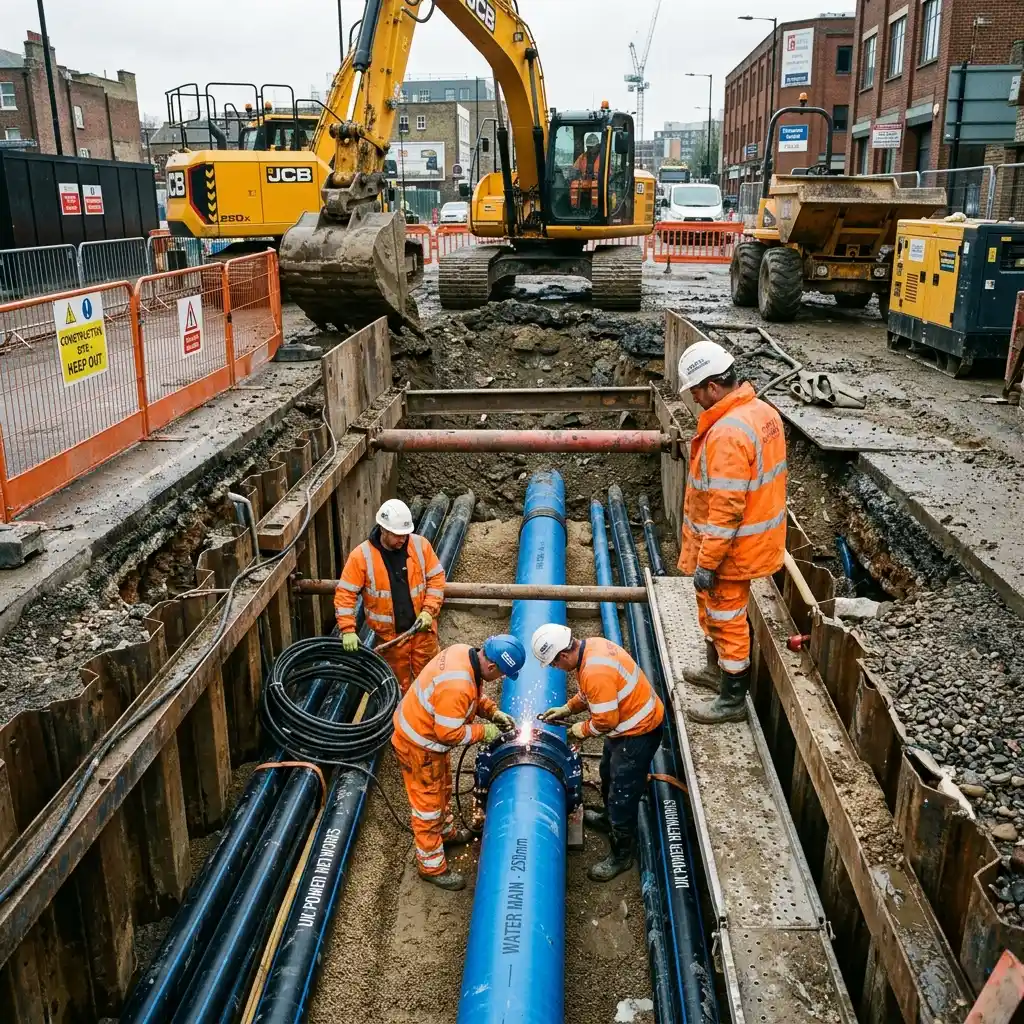
Underground utility construction services
Tunneling GLT provides end-to-end underground utility contracting across multiple infrastructure sectors. Every project is managed from initial ground investigation through to final reinstatement, with dedicated site management, certified equipment operators, and a commitment to safe digging practices on every dig.
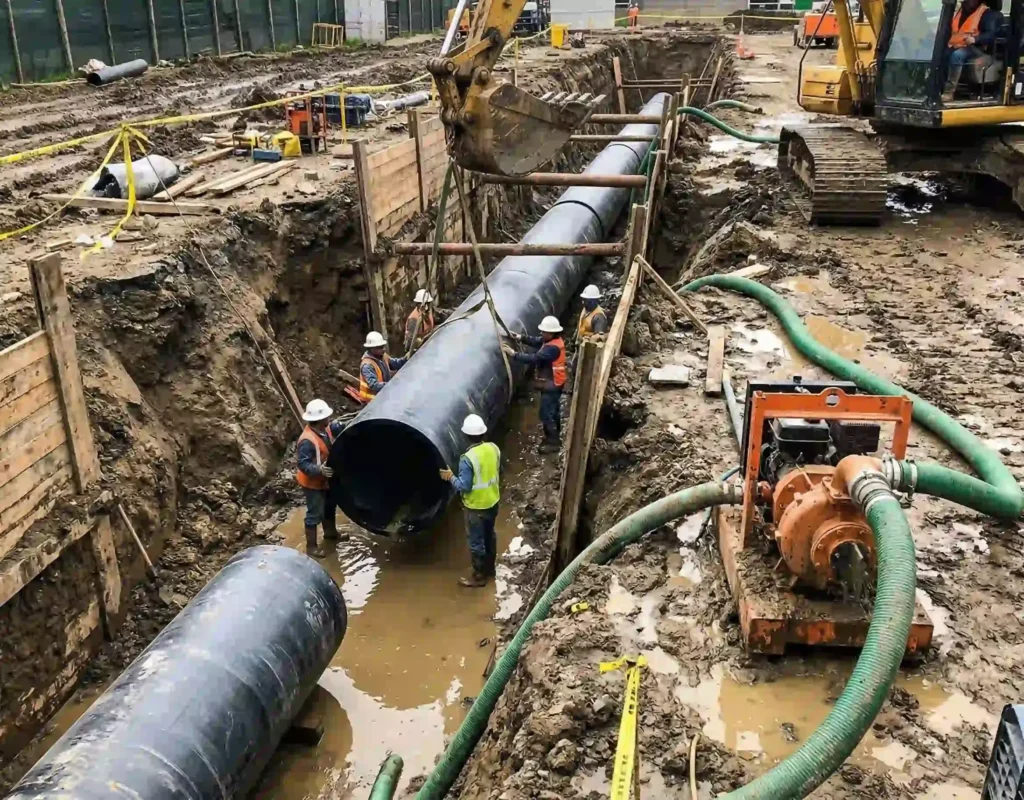
Water & wet utility contractors
The installation and maintenance of water mains, gravity sewers, rising mains, and drainage infrastructure demands precise excavation control and watertight jointing. Our wet utility contractors manage complete water utility projects — from route planning and trench excavation through to pipe laying, pressure testing, and surface reinstatement.
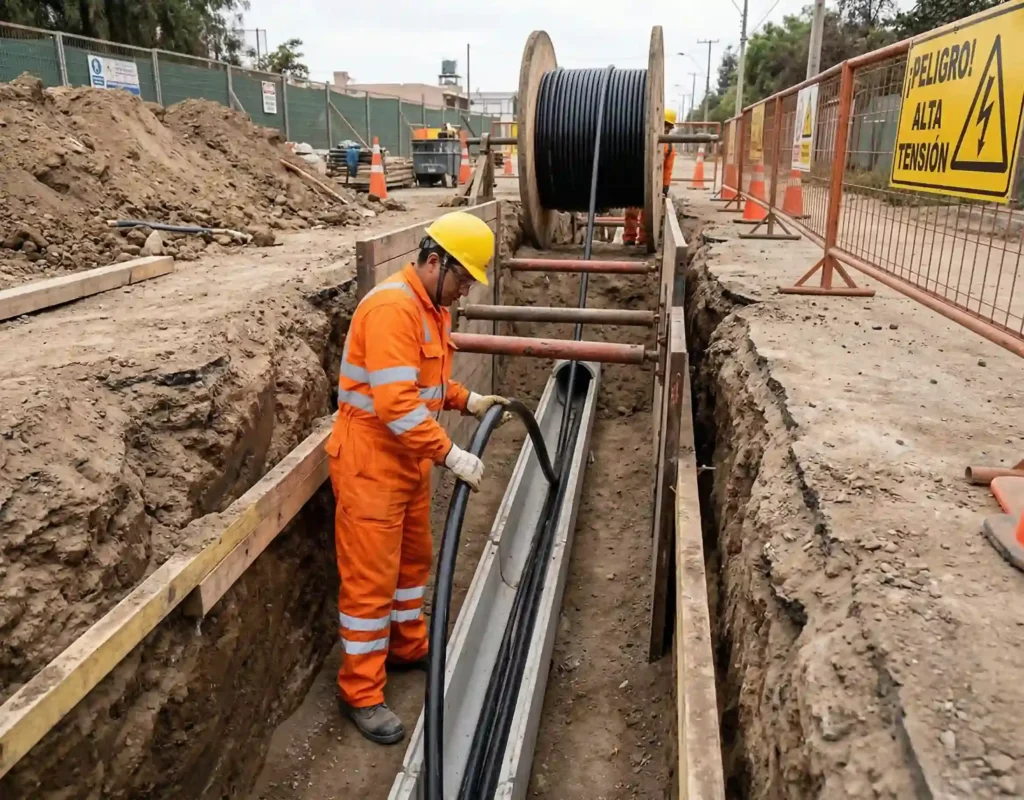
Underground electrical contractors
The burial and protection of high-voltage and low-voltage electrical cables requires adherence to strict network operator specifications and safe digging protocols. Our underground electrical contractor teams have direct experience working adjacent to live networks, implementing the required isolation, duct installation, and cable pulling procedures safely and efficiently.
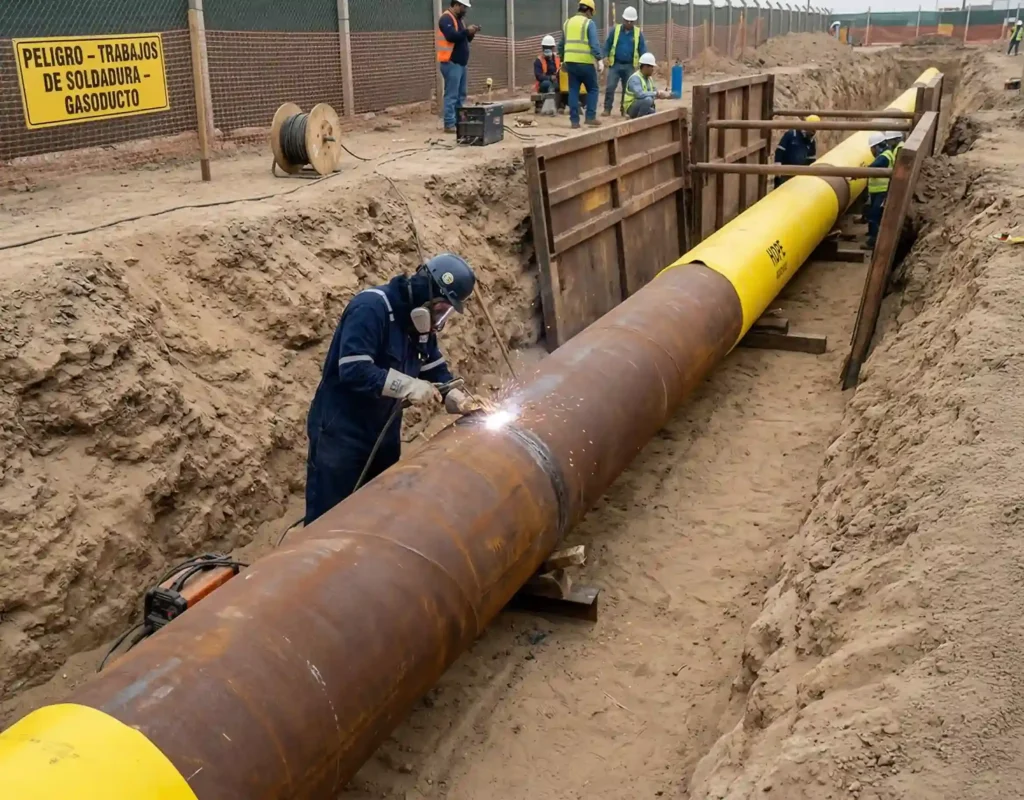
Gas pipeline installation & infrastructure
Our gas utility teams carry out the excavation, laying, and pressure-testing of gas distribution pipelines for network operators, independent connections providers, and large industrial clients. All works are conducted under gas-safe working procedures with qualified supervision throughout.
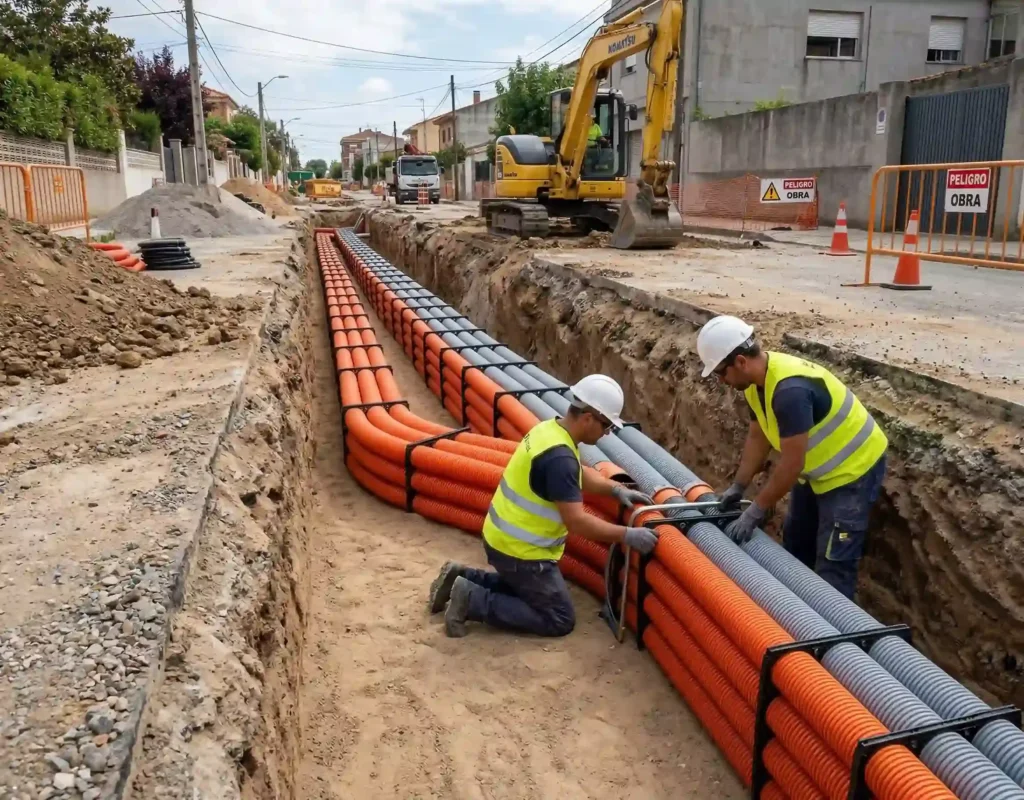
Underground cable construction & telecoms cucting
The expansion of fibre optic networks, data infrastructure, and telecoms conduit systems places increasing demand on specialist underground cable construction contractors. Tunneling GLT installs ducted cable routes for telecoms, broadband, and utility-grade data infrastructure using both open-cut and trenchless methods.
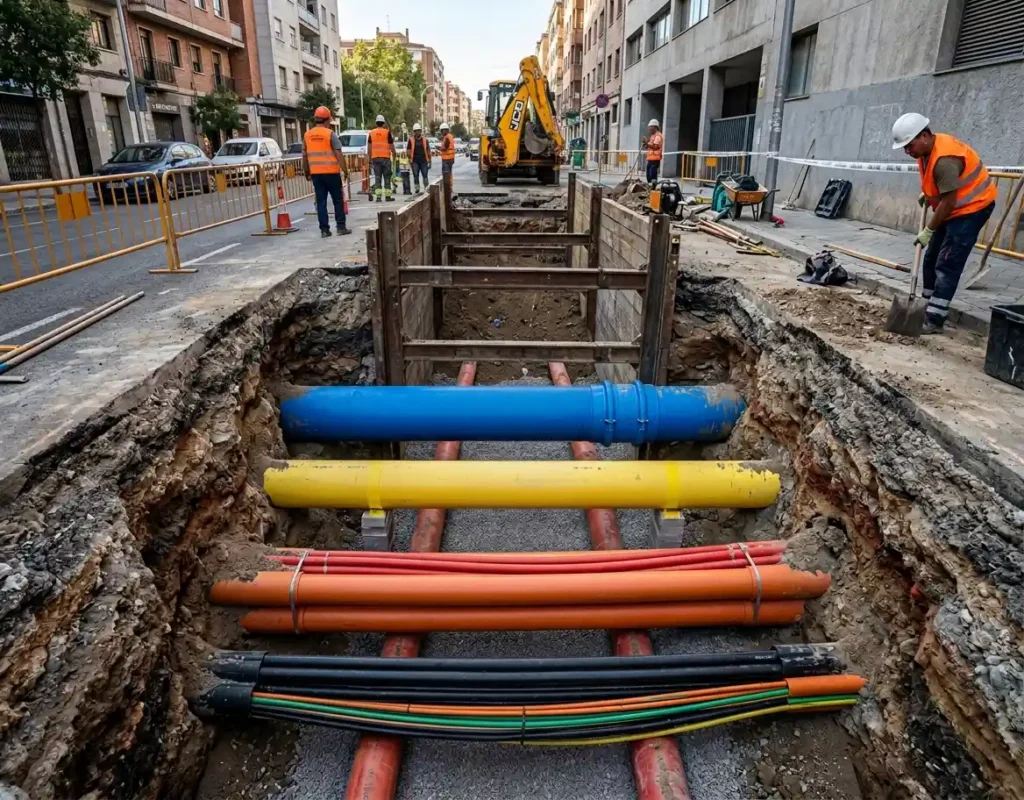
Multi-utility contractors
For development sites, highway schemes, and large-scale regeneration projects, multi-utility trenching delivers significant programme and cost efficiency by installing multiple utility services within a shared excavation. Our teams coordinate across disciplines — gas, water, power, telecoms — to deliver complete below-ground utility packages under a single contract.
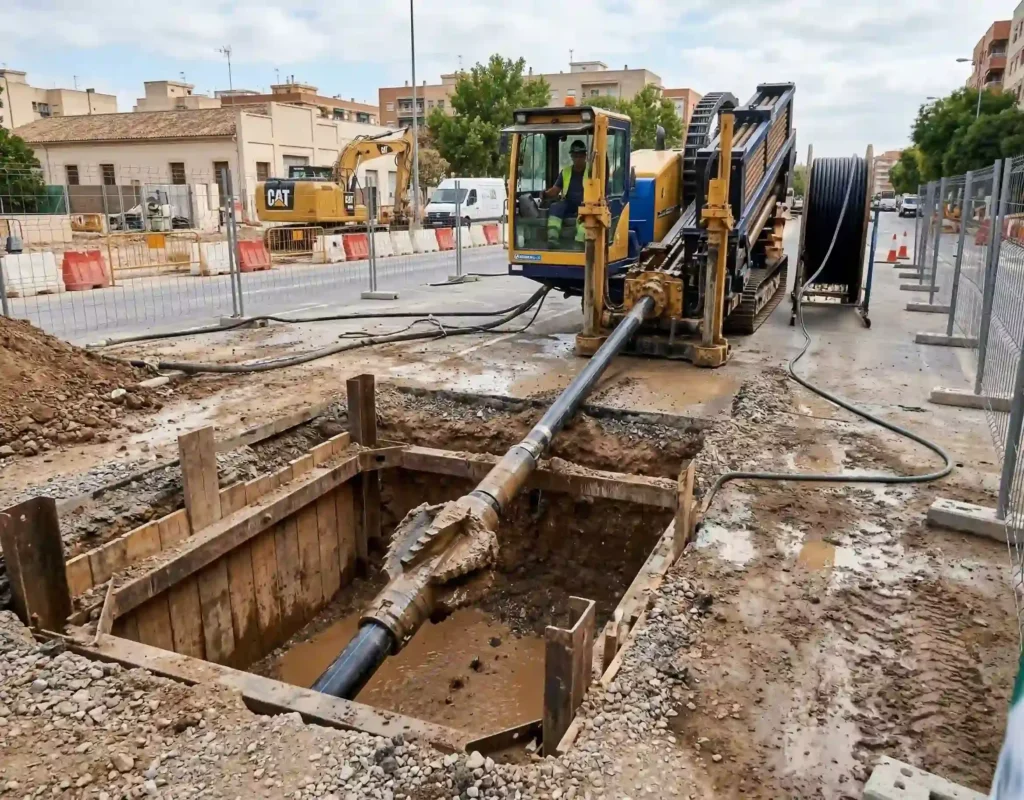
Trenchless utility installation
Where surface disruption must be minimised — beneath roads, railways, waterways, or sensitive urban environments — Tunneling GLT deploys trenchless technologies including horizontal directional drilling (HDD), pipe jacking, and microtunneling. These methods allow utility crossings to be completed without open excavation, reducing traffic disruption and environmental impact.
Types of underground utility construction projects
Our underground utility contracting services are deployed across a broad spectrum of project types — from single-service utility diversions to large-scale multi-utility infrastructure programmes. The following sectors represent the core of our project portfolio.
Highway & road
schemes
Housing & residential developments
Commercial & industrial sites
Rail & infrastructure corridors
Water & environmental projects
Energy & power
networks
Trusted by infrastructure and utility companies
Tunneling GLT has delivered underground utility construction and technical staffing services for major infrastructure programmes across Europe, Latin America, and beyond. The following testimonials reflect the experience of project directors and site managers who have worked with our teams.
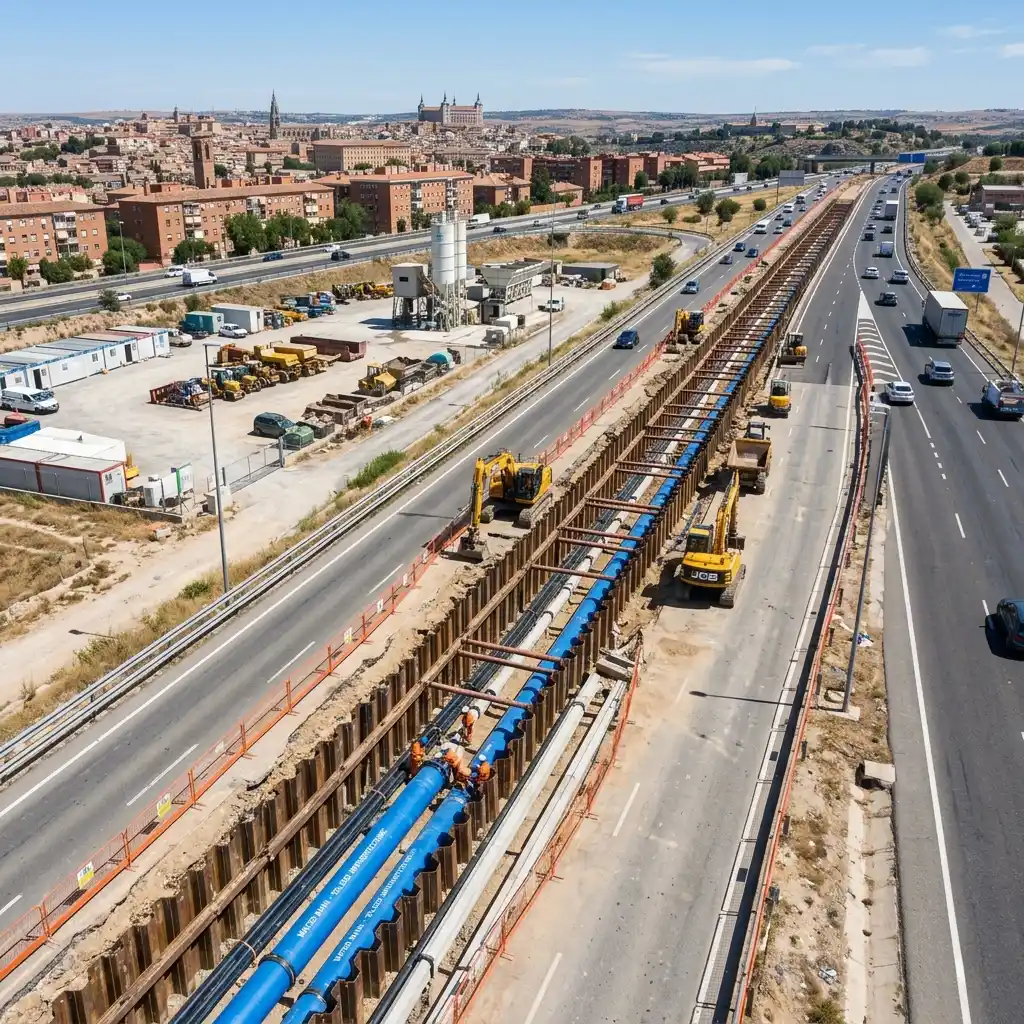

We required a fully equipped underground utility team at short notice to manage service diversions ahead of a road scheme. Tunneling GLT mobilised a crew — excavator operators, pipelayers, and a site supervisor — within the week. The works were completed on programme and to the specification of the network operators involved.
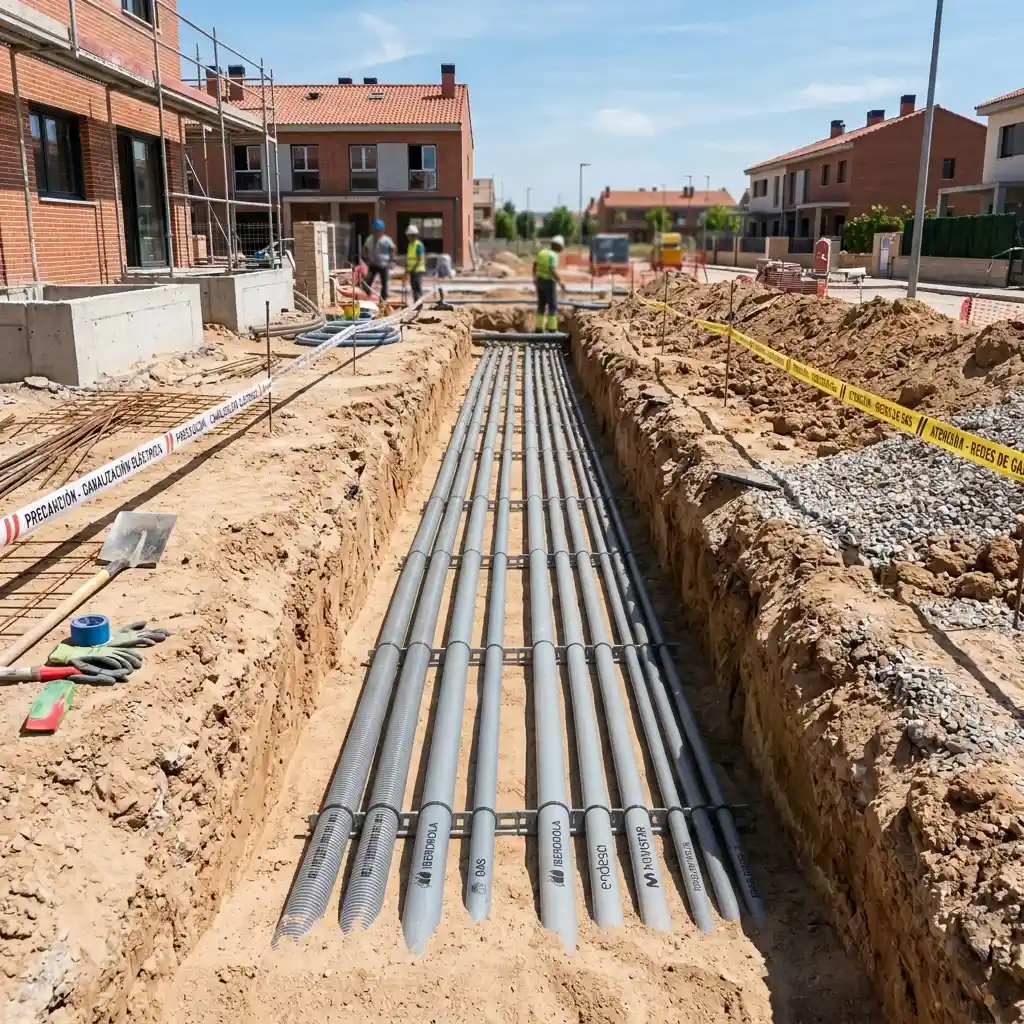
For a large residential development we required a single contractor to coordinate gas, water, and electrical infrastructure across the full site. Tunneling GLT managed the works from initial setting-out through to final adoption submissions. Their multi-utility experience reduced our programme risk and coordination overhead.
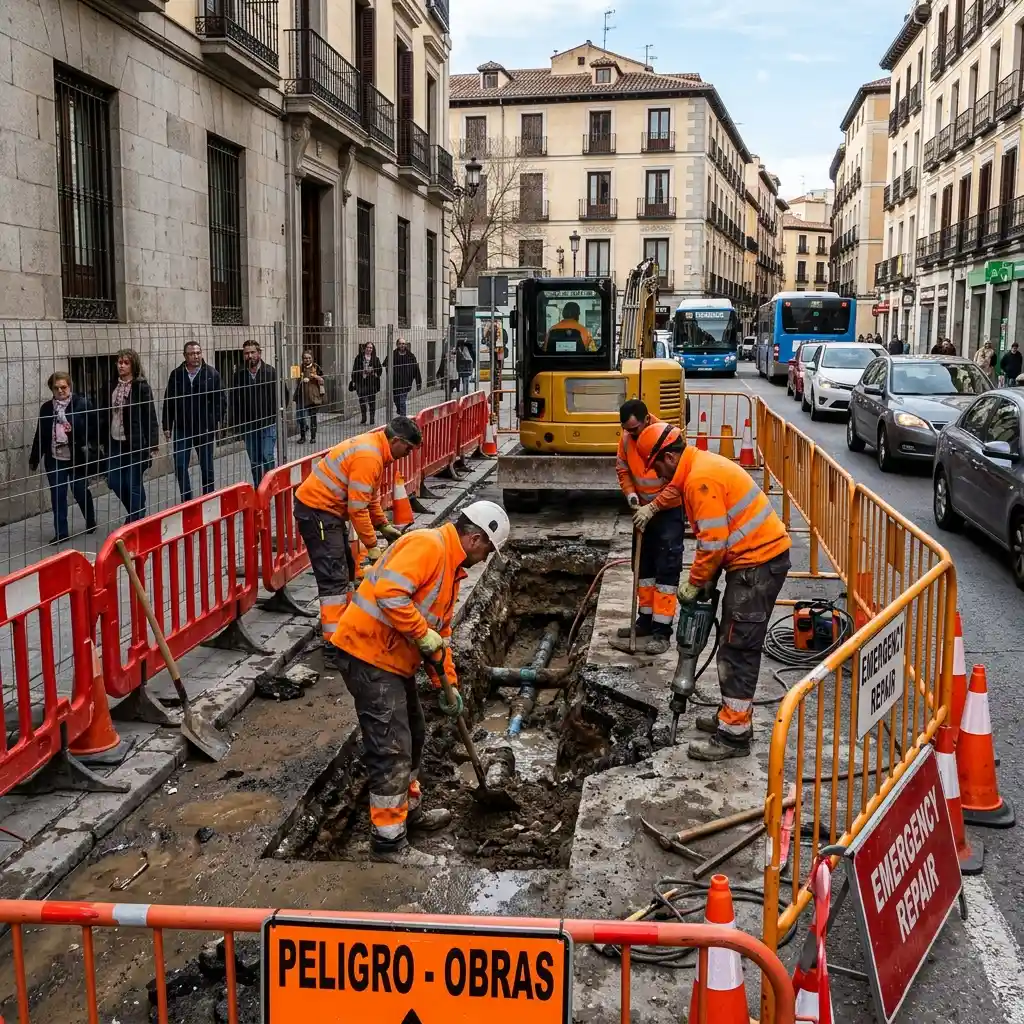
A burst water main adjacent to a live construction site required immediate excavation and repair under significant traffic management constraints. GLT Tunneling responded within 24 hours, managed the excavation safely around multiple conflicting services, and completed reinstatement within the period permitted by the local authority.
Ready to discuss your underground utility project?
Tunneling GLT provides specialist underground utility contracting services for civil infrastructure projects of all scales. Whether you require a single-service utility crossing, a complete multi-utility development package, or an emergency response capability, our project team is ready to assess your requirements and provide a tailored technical and commercial proposal.
Some related services
Everything you need to know about underground utility construction, contracting methods, and project procurement.
What is an underground utility contractor?
An underground utility contractor is a specialist civil engineering company that plans, excavates, installs, and reinstates below-ground infrastructure networks. These networks include water mains, gas pipelines, electrical power cables, telecommunications conduits, drainage systems, and other utility services that are routed underground for safety, operational, or aesthetic reasons.
Underground utility contractors work on behalf of utility network operators, local authorities, principal contractors, and private developers. Their scope typically covers the full project lifecycle — from initial site investigation and service detection through to open-cut or trenchless excavation, pipe or cable installation, pressure or continuity testing, and final surface reinstatement.
Tunneling GLT provides underground utility contracting services with dedicated crews, certified equipment operators, and full project management — across a wide range of utility types, ground conditions, and site environments.
What types of underground utilities does Tunneling GLT install?
Tunneling GLT’s underground utility construction services cover the principal utility categories required across civil infrastructure projects:
- Water mains and wet utilities: potable water, gravity sewers, rising mains, and surface water drainage
- Gas distribution pipelines: low, medium, and high-pressure gas infrastructure for network operators and independent connections
- Power and electrical cables: high-voltage and low-voltage cable burial, duct installation, and substation connection works
- Telecommunications and data infrastructure: fibre optic ducting, telecoms conduit, and cable route installation
- Multi-utility packages: coordinated installation of multiple services within shared excavations for development and highway schemes
Each project is assessed individually to determine the appropriate installation method, ground investigation requirements, and utility network coordination procedures.
What is the difference between open-cut excavation and trenchless utility installation?
Open-cut excavation involves the removal of surface material — typically carriageway, footway, or topsoil — to expose the required trench depth for utility installation. It is the most common method for utility construction and is appropriate where surface disruption is acceptable, ground conditions permit safe trench formation, and the utility run is of moderate length.
Trenchless installation methods — including horizontal directional drilling (HDD), pipe jacking, and microtunneling — install utility infrastructure beneath the surface without open excavation. These methods are required when crossing beneath roads, railways, waterways, or in urban environments where surface disruption would be impractical, hazardous, or prohibited. Trenchless methods typically carry a higher unit cost per metre but avoid the programme impact of carriageway closures, traffic management, and reinstatement.
Tunneling GLT can advise on the most appropriate installation method for any utility route based on ground conditions, surface constraints, utility type, and project programme requirements.
What does "safe digging" mean and why does it matter?
Safe digging refers to the set of procedures and protocols that must be followed before and during any ground excavation to identify, locate, and protect existing underground services from damage. Damage to live utility services — electricity cables, gas mains, water pipes, and telecoms infrastructure — can cause serious injury or death to site personnel, disruption to utility customers, and significant financial liability for the responsible contractor.
Best practice safe digging requires: obtaining utility network records from all relevant asset owners; conducting on-site cable avoidance tool (CAT) scanning and signal generator sweeps; hand excavating or vacuum excavating within defined proximity zones around known services; and maintaining ongoing communication with utility asset owners throughout the works.
Tunneling GLT applies safe digging procedures on every underground utility project. Our compliance with national safe digging guidelines is a core requirement of our project safety management system, not an optional measure.
How are underground utility works planned and coordinated with utility network operators?
Prior to commencing any underground utility construction, a structured coordination process with the relevant network operators is required. This typically involves:
- Statutory notification: filing formal notifications with utility asset owners within the statutory timeframe required by applicable regulations (e.g., NRSWA in the UK, equivalent legislation in other jurisdictions)
- Record request and review: obtaining utility records, as-built drawings, and service confirmations from each asset owner for the excavation zone
- On-site detection: conducting physical surveys using CAT, GPR, or vacuum excavation to verify service positions relative to the records provided
- Excavation permit: obtaining any required permits or approvals from the highway authority or network owner for the proposed works
- Ongoing liaison: maintaining active communication with asset owners during the works, particularly when approaching recorded service positions or encountering unexpected infrastructure
Tunneling GLT manages the complete coordination process on behalf of our clients, liaising directly with all relevant network operators and highway authorities from project initiation through to reinstatement sign-off.
What ground conditions are suitable for underground utility construction?
Underground utility construction is technically feasible across a wide range of ground conditions, though the appropriate excavation method and equipment selection will vary significantly depending on the ground type encountered.
In cohesive soils — clays, silts, and firm ground — open-cut excavation proceeds efficiently and trench walls can be supported with standard trench box systems. In granular or water-bearing ground — sands, gravels, and made ground with elevated groundwater — dewatering, sheet piling, or trenchless alternatives may be required to maintain excavation stability. In rock, hydraulic rock breakers, rock saws, or drill-and-blast methods may be necessary for trench formation.
Tunneling GLT carries out ground investigation reviews and, where necessary, commissions site investigation works prior to project mobilisation to confirm appropriate excavation methods and equipment for the specific ground profile.
What is a wet utility contractor?
A wet utility contractor specialises in the installation of below-ground infrastructure that carries liquids or is directly associated with drainage and water management. Wet utilities include potable water mains, gravity sewers and rising mains, surface water drainage, district heating networks, and associated connection works.
The term distinguishes this scope from «dry utilities» — electrical cables, gas pipelines, and telecoms ducting — which are also installed underground but do not convey water. Many projects require both wet and dry utility installation, and Tunneling GLT provides multi-utility contracting capability to manage both within a single coordinated programme.
Can Tunneling GLT provide emergency underground utility response services?
Yes. Tunneling GLT maintains the capacity to respond to emergency underground utility situations requiring immediate excavation, diagnosis, and repair. Emergency scenarios include burst water mains requiring urgent excavation and repair, damaged cable infrastructure requiring exposure and isolation, and unplanned service conflicts discovered during active construction programmes.
Our emergency response capability includes the rapid mobilisation of equipped crews, the deployment of appropriate excavation plant, and coordination with the relevant network operators to ensure that emergency works are carried out safely and in compliance with all applicable requirements. Contact our project team directly to discuss emergency utility response requirements.
What certifications and accreditations should an underground utility contractor hold?
The specific certifications and accreditations required of an underground utility contractor vary by jurisdiction and by the type of utility network being worked on. Common requirements include:
- Health and safety management: ISO 45001 or equivalent occupational health and safety management system certification
- Streetworks and highway compliance: operative-level and supervisory streetworks qualifications (e.g., NRSWA accreditation in the UK)
- Gas safe working: Gas Safe registration and associated operative qualifications for any works on or adjacent to gas distribution infrastructure
- Electrical safe systems of work: authorised person and competent person designations for works on or adjacent to electrical networks
- SHEA-Utilities card scheme: Site Health, Environment and Safety Assessment for the utilities sector
- Environmental management: ISO 14001 certification for projects with environmental management plan requirements
Tunneling GLT operates under a comprehensive quality, health, safety, and environmental management framework. Our project managers can provide accreditation details relevant to any specific contract requirement upon request.
How is underground utility construction priced?
The cost of underground utility construction varies significantly depending on a range of project-specific factors:
- Utility type and size: larger diameter pipes and high-voltage cable systems carry higher material and installation costs than standard distribution services
- Excavation method: trenchless installation typically costs more per metre than open-cut but avoids significant ancillary costs (carriageway reinstatement, traffic management)
- Ground conditions: poor or variable ground requiring dewatering, shoring, or specialist plant will increase cost
- Programme: accelerated or shift-working programmes carry a labour premium but reduce overall project duration
- Reinstatement specification: full-depth highway reinstatement to adoptable standard is significantly more costly than temporary or topsoil reinstatement
- Coordination complexity: projects requiring extensive utility diversion or coordination across multiple asset owners involve a higher programme management cost
Tunneling GLT provides transparent project-specific cost estimates following an initial project assessment. Contact our team with your project details to receive a tailored commercial proposal.