
Tunnel construction
What is tunnel construction?
Tunnel construction is the specialist branch of civil engineering focused on planning, designing, and executing underground excavation works to create passages, corridors, and enclosed spaces through or beneath earth, rock, and existing structures. It includes tunnel boring and lining for transport, rail, road, and utility infrastructure, as well as the construction of shafts, station boxes, and underground chambers, together with related ground investigation, waterproofing, and reinstatement works.
As a discipline, tunnel construction requires geotechnical knowledge, structural design of support systems, and expertise across excavation methods such as drill-and-blast, cut and cover, and mechanised tunnel boring machines (TBMs).
Tunneling GLT operates as a specialist tunnel construction contractor, delivering tunnelling works for infrastructure programmes, principal contractors, and asset owners across international markets.
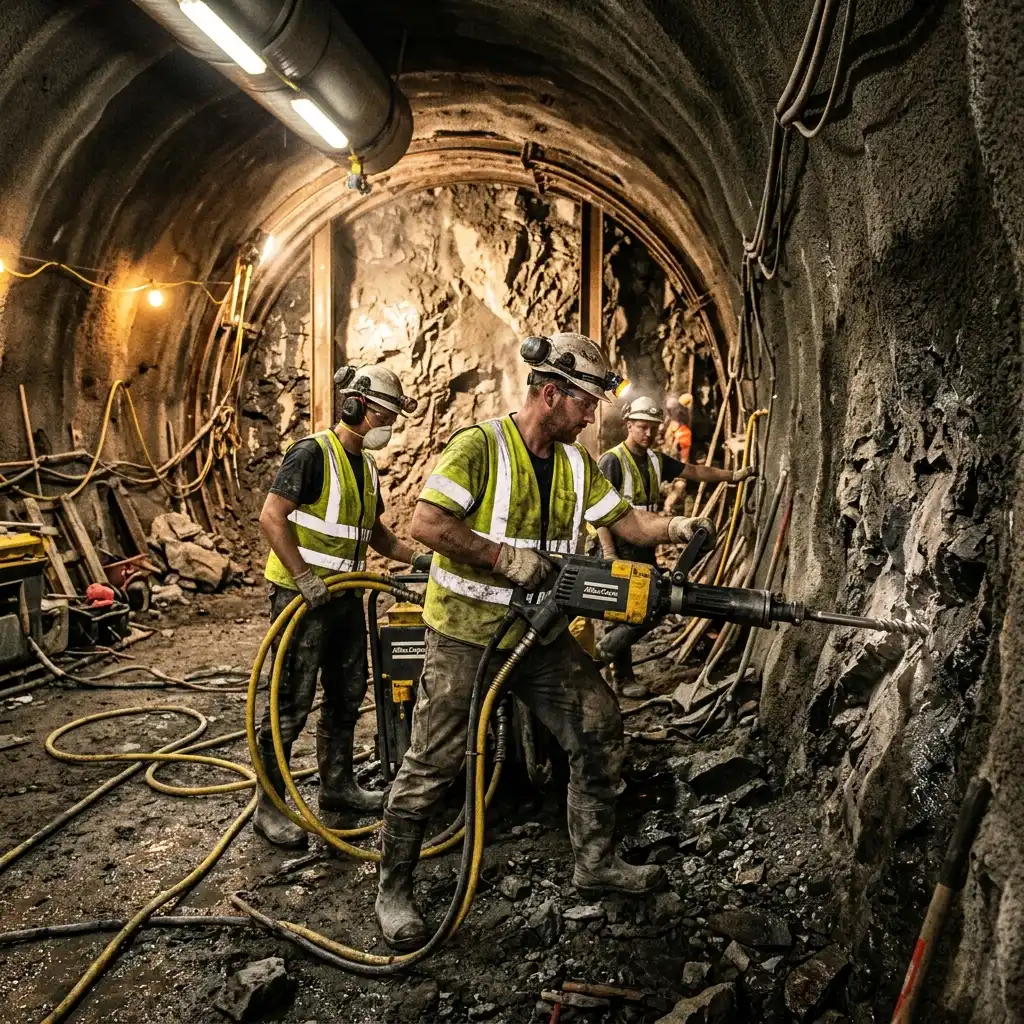
Tunnel construction services
Tunneling GLT delivers tunnel construction across the principal categories of underground infrastructure. Each contract is managed under a structured programme with qualified engineering supervision, certified plant operators, and a comprehensive safety management system applied from mobilisation through to handover.
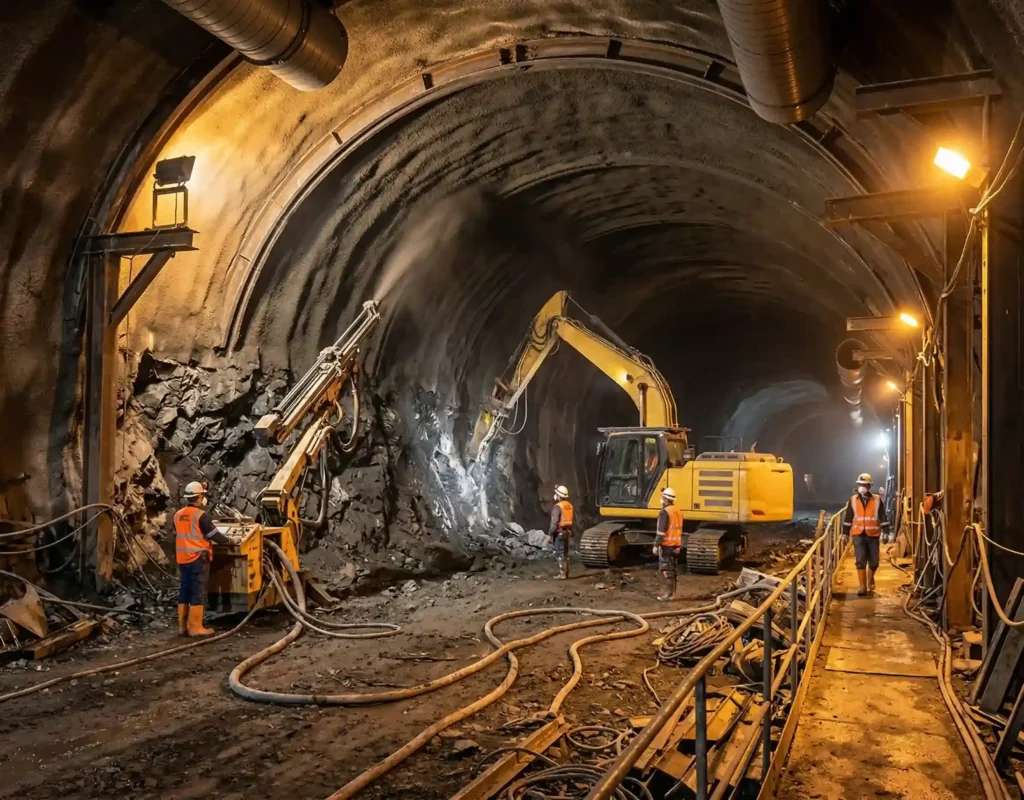
Tunnel excavation & boring
The excavation and boring of tunnels for transport, railway, road, and utility purposes demands a technically disciplined approach to face stability, ground reinforcement, primary support installation, and permanent lining construction. Tunneling GLT executes tunnel excavation using conventional drill-and-blast methods in competent rock conditions, sequential NATM techniques in mixed and soft ground, and mechanised boring with tunnel boring machines (TBMs) for long drives in urban and infrastructure corridors. Sprayed concrete lining, precast concrete segmental systems, and in-situ concrete with tunnel formwork are selected according to ground profile, tunnel diameter, and final use classification.
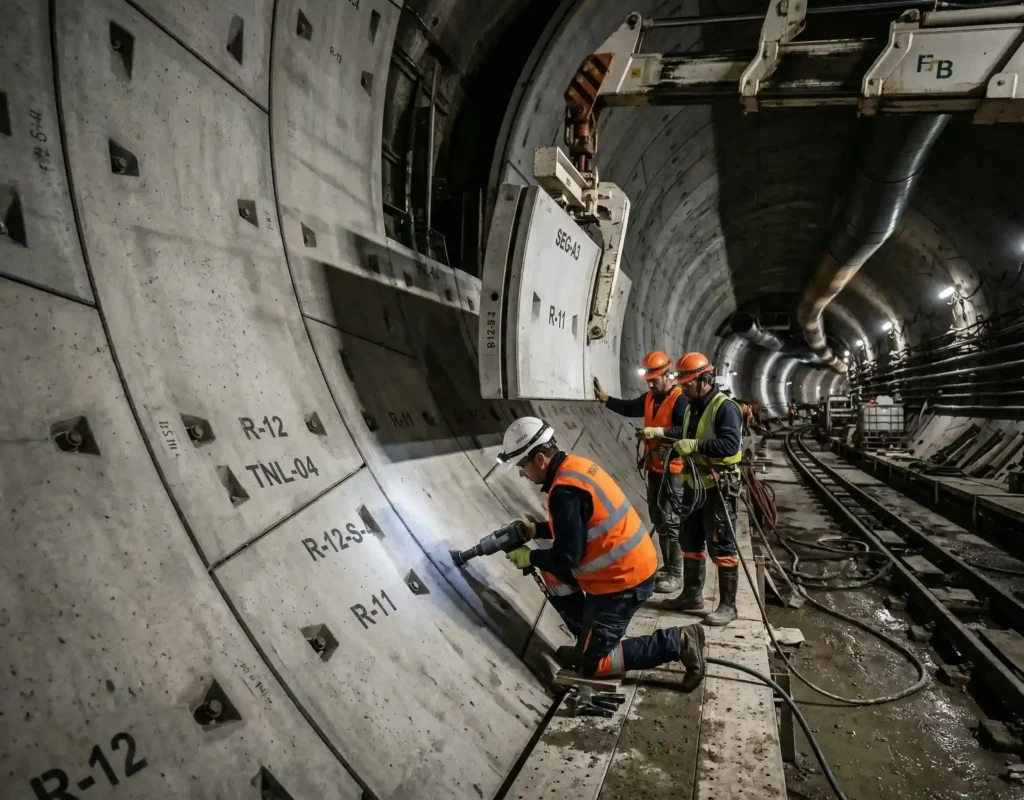
Tunnel lining & waterproofing
The permanent lining of a tunnel serves as its primary structural system and the first line of defence against groundwater ingress. Tunneling GLT installs all principal tunnel lining systems: sprayed concrete (shotcrete) applied in sequence with the excavation advance; precast concrete segmental rings erected by TBM erector within the boring shield; and in-situ concrete cast using tunnel formwork for final lining of mined tunnels. Tunnel waterproofing membranes and drainage systems are installed between the primary support and permanent lining where required by ground conditions and the tunnel’s operational classification.
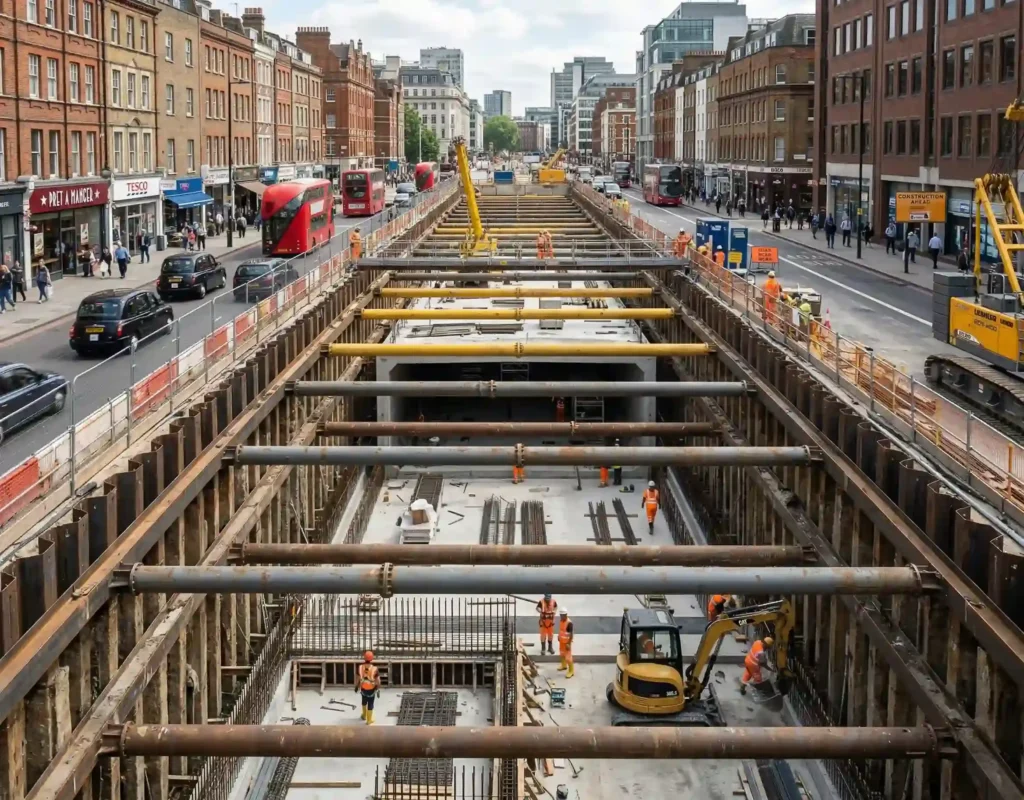
Cut and cover tunnel construction
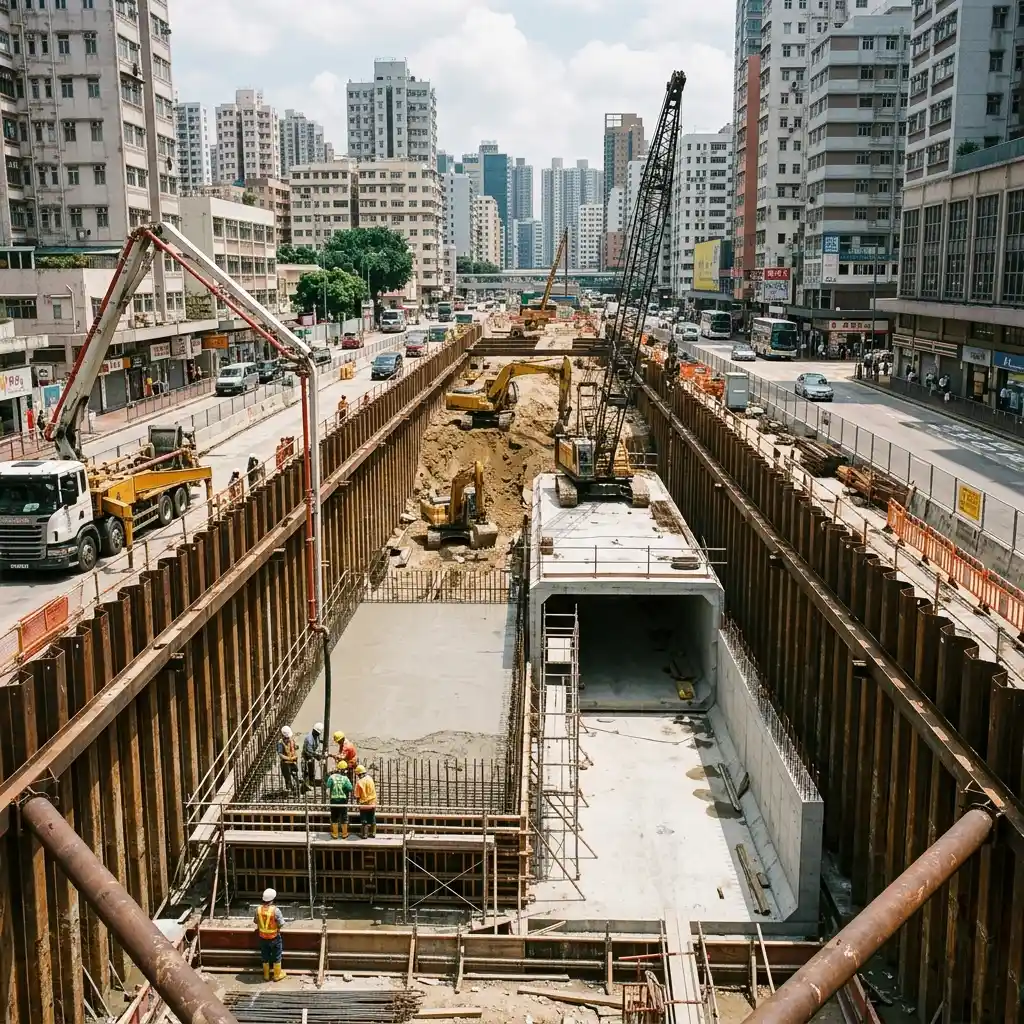
Cut and cover is a tunnel construction method suited to shallow alignments in urban environments where sufficient surface access permits open excavation. The tunnel box structure is constructed within a supported trench — using sheet piling, secant piles, or contiguous pile walls as temporary earth retention — and the surface is reinstated above the completed structure. Tunneling GLT delivers cut and cover tunnel construction for highway underpasses, shallow metro tunnels, utility tunnels, and subterranean civil structures where depth of cover does not justify a bored tunnelling approach.
Trenchless tunnel construction
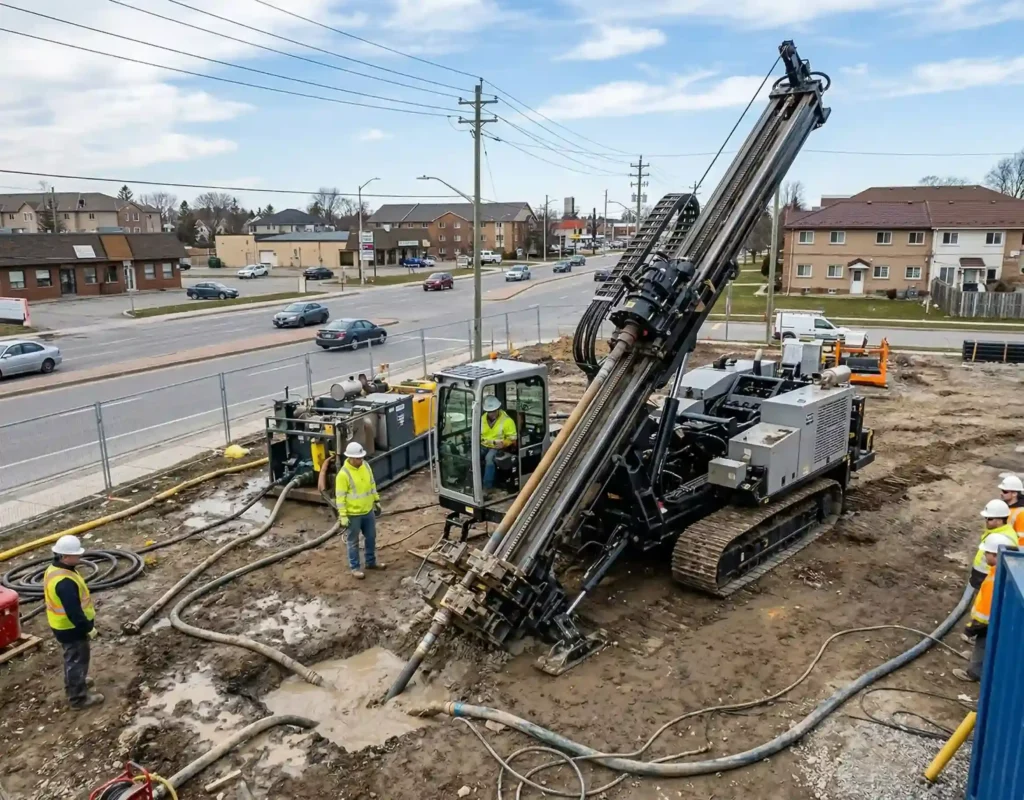
Where surface disruption is impractical, restricted, or prohibited — beneath active roads, railway infrastructure, waterways, or protected ground — Tunneling GLT deploys trenchless tunnel construction methods including pipe jacking, microtunnelling, and horizontal directional drilling (HDD). These techniques install utility tunnels, sewer crossings, drainage conduits, and infrastructure pipelines beneath obstacles without open excavation, with minimal impact on surface operations and traffic.
Underground civil structures & shafts
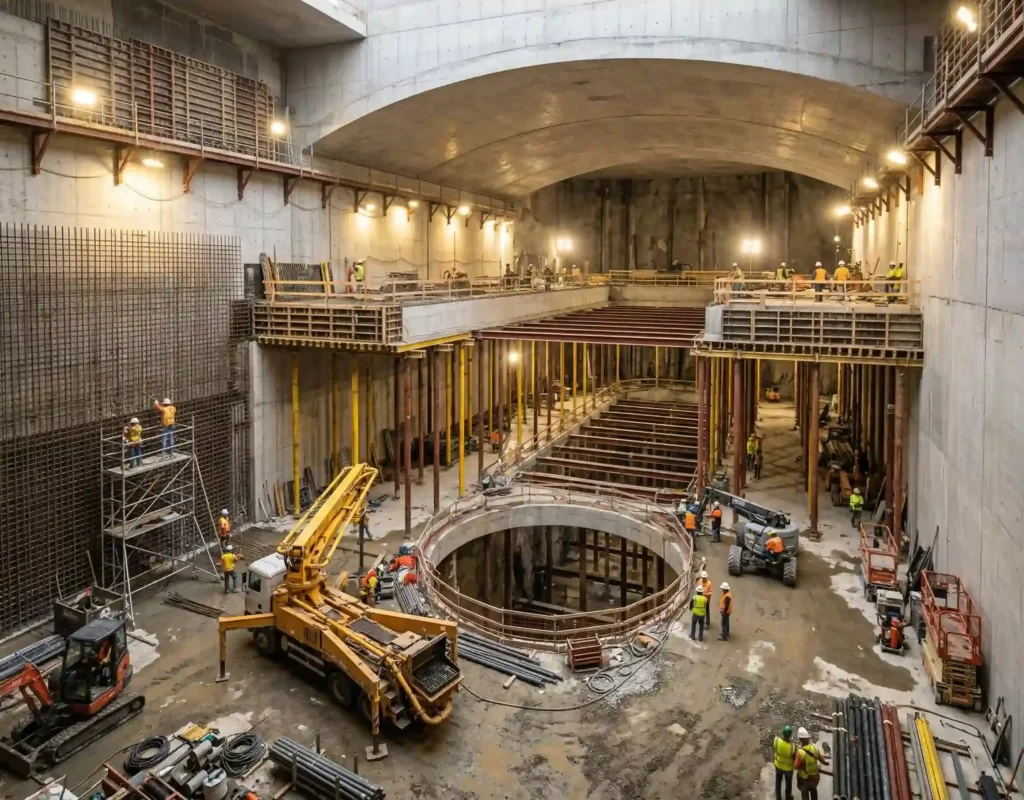
Tunnel construction projects typically require associated underground civil structures: access and ventilation shafts, cross-passages, underground station boxes, junction chambers, and subterranean infrastructure vaults. Tunneling GLT provides structural construction capability for these associated works, including specialist temporary works design, ground support engineering, reinforced concrete installation, and tunnel waterproofing to permanent specification. These structures are designed and built as integral elements of the tunnel construction programme, coordinated with the main excavation sequence.
Types of tunnel construction projects
Tunneling GLT’s tunnel construction capability is applied across a broad spectrum of project categories, reflecting the range of ground conditions, tunnel diameters, and infrastructure sectors served across international markets.
Rail & railway tunnels
Subway & metro tunnels
Road & highway tunnels
Utility tunnels
Sewer tunnels & drainage
Water supply tunnels
Transport infrastructure
Mining & mined tunnels
Energy & cable tunnels
Trusted by infrastructure and engineering companies
Tunneling GLT has delivered tunnel construction and specialist tunnelling services for major infrastructure programmes across Europe, Latin America, and international markets. The following reflect the experience of engineering directors and project managers who have engaged our tunnel construction teams on complex underground contracts.
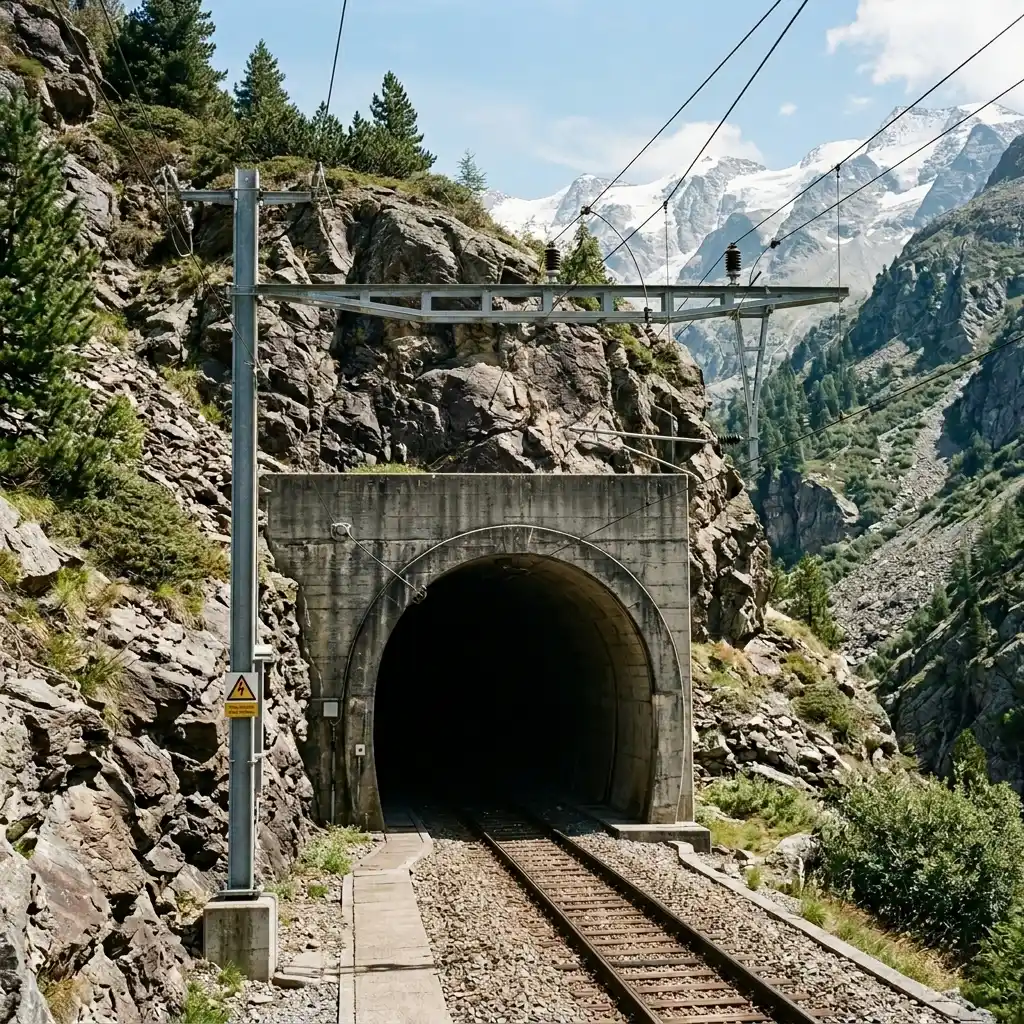

We required a tunnel crew with shotcrete and primary support experience at short notice for a railway tunnel section. Tunneling GLT mobilised an equipped team — drill operators, shotcrete technicians, and a tunnel supervisor — within one week of contract award. Tunnel excavation and lining works were completed on programme and to specification.
cover tunnel
Our project required a tunnel construction contractor with cut and cover experience and capacity to manage complex ground conditions in an urban environment. Tunneling GLT delivered the full tunnel box construction scope from sheet piling and excavation through to waterproofing and concrete lining, coordinating with the highway authority throughout.
repair
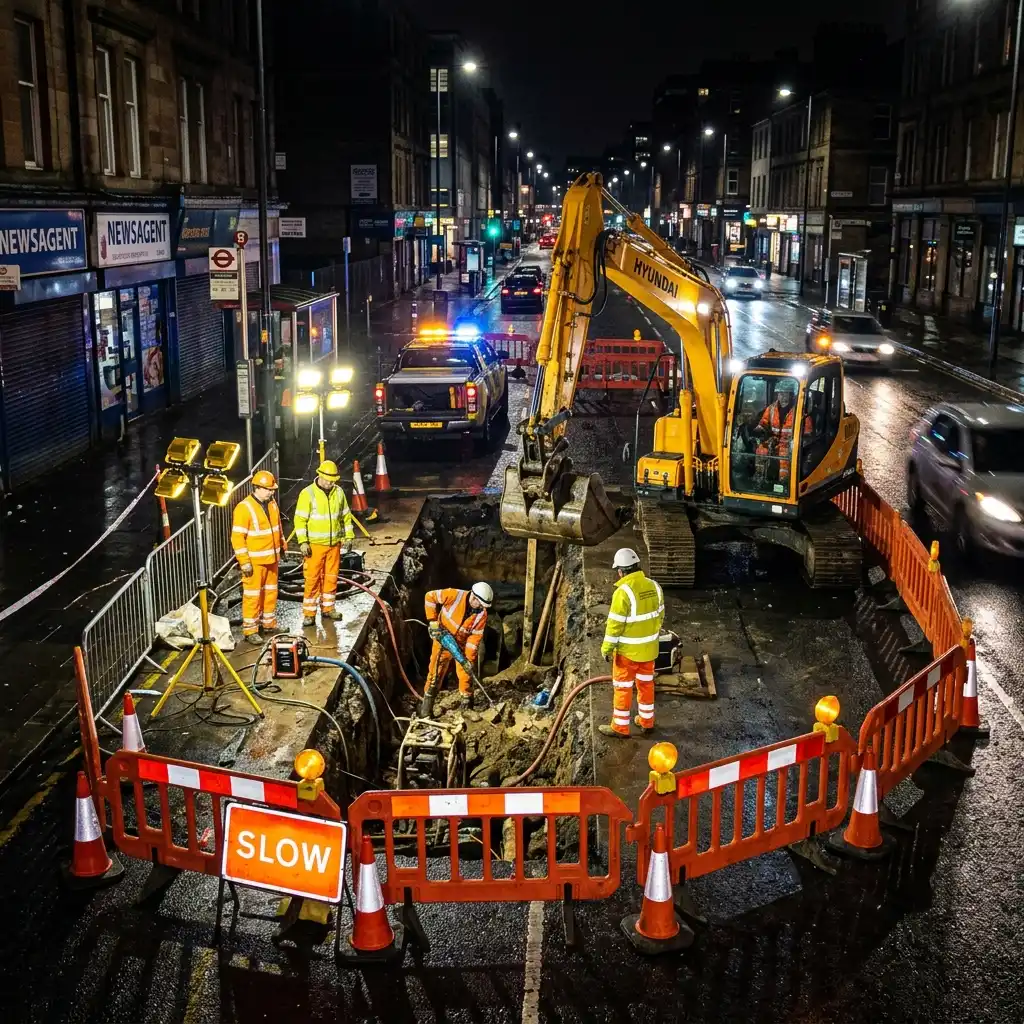
A structural failure affecting a buried tunnel adjacent to a live construction corridor required immediate excavation, assessment, and remediation. Tunneling GLT mobilised within 24 hours, managed safe excavation around multiple conflicting buried services, and completed permanent reinstatement within the regulatory timescale permitted by the authority.
Ready to Discuss Your Tunnel Construction Project?
Tunneling GLT provides specialist tunnel construction services for civil infrastructure projects of all scales and complexities. Whether your requirement is a conventional drill-and-blast tunnel drive through hard rock, a mechanised TBM bore for a rail or subway tunnel, a cut and cover structure in an urban environment, or a trenchless crossing beneath critical infrastructure, our engineering team is available to assess your scope and deliver a technically grounded and commercially transparent proposal.
Some related services
Technical and commercial answers to the most common questions about tunnel construction, tunnelling methods, and project planning.
What is tunnel construction?
Tunnel construction refers to the specialist engineering discipline concerned with the planning, design, and physical execution of works to create an underground passage, corridor, or enclosed space through or beneath earth, rock, water, or existing built structures.
In practice, tunnel construction encompasses several distinct categories: the excavation and permanent lining of tunnels for transport, railway, metro, road, and utility use; the boring of utility tunnels and sewer tunnels for below-ground service infrastructure; the construction of associated underground structures such as shafts, cross-passages, and junction chambers; and the ground investigation, tunnel waterproofing, and surface reinstatement required to complete tunnel projects safely.
Tunnel construction is distinguished from surface civil engineering by the confined nature of underground working environments, the structural complexity of primary and permanent lining systems, the geotechnical risk of excavating through unknown or variable ground, and the specialist plant, methods, and competencies required to manage these conditions safely.
What tunnel construction methods are available?
The principal tunnel construction methods are:
Drill-and-Blast Tunnelling: The conventional method for tunnel construction in hard rock. Boreholes are drilled into the tunnel face, loaded with explosives, and detonated in a controlled sequence to break the rock. The excavated material (muck) is removed, and primary support — typically sprayed concrete (shotcrete), rock bolts, and steel sets — is installed before the next cycle begins.
New Austrian Tunnelling Method (NATM): A sequential tunnel construction approach used in both rock and soft ground, in which the excavation is advanced in controlled stages and the surrounding rock mass or soil is allowed to contribute to structural stability. Instrumentation and monitoring are applied throughout to manage ground behaviour.
Tunnel Boring Machine (TBM): A mechanised tunnel construction system using a full-face rotating cutting head to bore continuously through the ground. Precast concrete segmental lining rings are erected within the shield as excavation advances. TBMs are classified as open-face, earth pressure balance (EPB), or slurry type, depending on ground and groundwater conditions.
Cut and Cover: A tunnel construction method for shallow tunnels, in which a trench is excavated from the surface, the tunnel box structure is built within it using reinforced concrete, and the covering ground is reinstated above. Commonly used for shallow metro tunnels, highway underpasses, and utility tunnels.
Pipe Jacking and Microtunnelling: Trenchless tunnel construction methods in which a pipeline or small-diameter tunnel is hydraulically jacked through the ground from a launch shaft to a reception shaft. Used for sewer tunnels, drainage crossings, and utility tunnels beneath roads and railways.
Horizontal Directional Drilling (HDD): A trenchless method for installing small-diameter utility tunnels and pipeline crossings beneath roads, waterways, and infrastructure without open excavation.
What is the difference between a bored tunnel and a cut and cover tunnel?
A bored tunnel is constructed entirely underground, without disturbing the surface above. Excavation advances from within the ground using a TBM, drill-and-blast, or NATM methods. The tunnel is supported as excavation proceeds, and the finished tunnel exists at depth. Bored tunnels are used where depth of cover is sufficient, where surface disruption cannot be tolerated, or where the alignment passes beneath buildings, rail infrastructure, or waterways.
A cut and cover tunnel is built by first excavating a trench from the surface down to the required depth, constructing the reinforced concrete tunnel box within the open excavation, and then backfilling and reinstating the surface above the completed structure. Cut and cover tunnel construction is suited to shallow alignments where surface access is available, and is widely used for shallow metro tunnels, highway underpasses, and utility tunnel construction in urban corridors.
The choice between bored and cut and cover tunnel construction is governed by depth, geology, surface constraints, available programme, cost, and the presence of existing infrastructure above and below the proposed tunnel alignment.
What ground conditions are suitable for tunnel construction?
Tunnel construction is technically feasible across a wide range of ground conditions, though the excavation method, ground support system, and structural approach will differ significantly depending on the geotechnical profile.
In hard rock — granites, limestones, sandstones, and other competent rock masses — tunnel construction typically uses drill-and-blast excavation or hard rock TBMs. Where the surrounding rock mass is self-supporting, primary lining requirements may be minimal. Weaker or heavily jointed rock requires more intensive ground reinforcement with shotcrete, rock bolts, and steel support.
In soft ground — clays, silts, and cohesive soils — sequential NATM excavation or EPB TBMs are commonly used for tunnel construction. Face stability must be actively managed, and primary support must be installed immediately after each excavation advance.
In water-bearing or granular ground — sands, gravels, and made ground with high groundwater levels — tunnel construction requires additional measures including dewatering systems, compressed air working, slurry TBMs, or ground treatment to maintain face stability and protect the tunnel excavation.
In mixed-face conditions — where rock and soft ground are encountered simultaneously — tunnel construction methodology must be adapted to manage both materials across the full excavation sequence.
What is a Tunnel Boring Machine (TBM) and when is it used in tunnel construction?
A tunnel boring machine (TBM) is a mechanised tunnel construction system that excavates a full circular tunnel profile continuously using a rotating cutting head, with precast concrete segmental lining installed immediately behind the cutting shield as the machine advances.
TBMs are classified by their face support mechanism:
- Open-face TBMs — for stable, dry, self-supporting ground conditions.
- Earth Pressure Balance (EPB) TBMs — for soft, cohesive, and mixed-face ground; the excavated material is pressurised within the cutting chamber to balance earth and groundwater pressure at the tunnel face.
- Slurry TBMs — for highly permeable, unstable, or water-saturated ground; bentonite slurry is used under pressure to stabilise the face.
TBMs are used in tunnel construction when the drive length justifies the capital cost of machine procurement — typically from several hundred metres upward. They are the preferred method for long-distance rail and subway tunnel construction in urban environments, where surface subsidence must be minimised and conventional drill-and-blast or cut and cover methods are impractical.
What is cut and cover tunnel construction and when is it used?
Cut and cover is a tunnel construction method in which a trench is excavated from the surface, a reinforced concrete tunnel box structure is built within it, and the surface is reinstated above the completed structure.
Two principal variants are used in tunnel construction:
Bottom-up cut and cover: The trench is excavated with temporary earth retention walls (sheet piles, secant piles, or contiguous pile walls), the tunnel box is constructed from the base upward using in-situ reinforced concrete and tunnel formwork, and the roof slab is cast last before backfill and surface reinstatement.
Top-down cut and cover: The tunnel roof structure is constructed first at surface level, backfill is placed above it, and the internal tunnel structure is then excavated and constructed from within downward. This method allows surface reinstatement to proceed earlier, making it well-suited to urban tunnel construction in busy traffic corridors.
Cut and cover tunnel construction is used where tunnel depths are shallow, where surface access is available, and where the programme and cost efficiencies of open excavation outweigh the disruption associated with surface works.
What are the tunnel lining options in tunnel construction?
The permanent lining of a tunnel provides its long-term structural integrity and resistance to groundwater pressure. The principal tunnel lining systems used in tunnel construction are:
Sprayed Concrete (Shotcrete) Lining: Applied in layers to the excavated tunnel profile immediately after each advance. Used as both primary support during tunnel construction and, in thicker applications with waterproofing membrane, as the final structural lining. Reinforced with steel fibre, mesh, or lattice girders depending on loading requirements.
Precast Concrete Segmental Lining: Prefabricated tunnel lining rings assembled within the TBM shield by the erector. Each ring comprises multiple precast concrete segments bolted or compression-fitted together. The dominant lining system for mechanised TBM tunnel construction and bored tunnels.
In-Situ Concrete with Tunnel Formwork: Cast concrete permanent lining installed using specialised tunnel formwork (travelling formwork carriages) behind the excavation face. Used for the final lining of mined tunnels, rail tunnels, and road tunnels where a smooth, high-quality finished surface is required.
Tunnel Waterproofing: A waterproof membrane is installed between the primary shotcrete support and the permanent concrete lining in tunnels subject to groundwater pressure. Drainage channels and collection sumps manage residual water ingress. Tunnel waterproofing specification is determined by the tunnel’s operational classification and the groundwater regime at the site.
What safety requirements apply to tunnel construction?
Tunnel construction is classified as a high-risk construction activity subject to rigorous safety management requirements across all project phases:
Confined Space Management: All tunnel workings — tunnel headings, shafts, and underground excavations — are confined spaces requiring specific entry procedures, continuous atmospheric monitoring (oxygen levels, toxic and flammable gases), rescue plans, and operative competency certification.
Ground Support and Face Stability: Primary support systems must be designed by qualified engineers and installed in strict accordance with the excavation sequence. Face stability and support installation must be monitored throughout tunnel construction.
Safe Digging and Buried Service Avoidance: Prior to any tunnel excavation, utility records must be obtained, physical detection surveys conducted using CAT scanners and ground-penetrating radar (GPR), and hand or vacuum excavation used within defined proximity zones around known buried services.
Fire and Emergency Procedures: Tunnel construction environments require dedicated fire suppression, emergency communication, and evacuation systems designed for confined underground workings.
Health and Safety Management System: Tunnel construction contractors must operate under a documented safety management system compliant with applicable national and international standards — including ISO 45001 or equivalent.
How is tunnel construction priced?
Key certifications and accreditations for a tunnel construction contractor typically include:
Occupational Health and Safety: ISO 45001 or equivalent, with documented safe systems of work for confined space entry, underground working, and high-risk tunnel construction activities.
Tunnelling Competency: Operative and supervisory qualifications specific to tunnel excavation, ground support installation, TBM operation, shotcrete application, and tunnel waterproofing — including confined space working certification for all underground operatives.
Streetworks Compliance: Operative and supervisory streetworks accreditation (e.g., NRSWA in the United Kingdom or equivalent) for tunnel construction and utility works within public highways.
Environmental Management: ISO 14001 certification for projects with environmental management requirements, including groundwater protection and contaminated land management.
Structural and Geotechnical Engineering Competency: Qualified engineering personnel with demonstrable experience in tunnel construction design, temporary works, ground support engineering, and tunnel lining specification.
Tunneling GLT operates under a comprehensive quality, health, safety, and environmental management framework. Relevant accreditation and certification documentation is provided to clients as part of the pre-qualification and tender process.
What qualifications should a tunnel construction contractor hold?
Tunnel construction costs vary significantly based on project-specific factors:
Excavation Method: Mechanised TBM tunnel construction and trenchless methods carry higher unit costs per metre than drill-and-blast or cut and cover, but avoid significant ancillary costs including surface reinstatement, traffic management, and carriageway disruption.
Ground Conditions: Difficult or variable ground requiring dewatering, ground treatment, or enhanced primary support increases tunnel construction cost relative to stable, predictable geotechnical profiles.
Tunnel Diameter and Drive Length: Larger-diameter tunnels require more substantial excavation and lining systems. Longer tunnel drives reduce unit cost per metre through plant amortisation but require greater mobilisation investment.
Tunnel Lining Specification: Permanent lining requirements — sprayed concrete, precast concrete segmental rings, or in-situ concrete with tunnel formwork — significantly affect material and installation cost.
Tunnel Waterproofing Requirements: The extent and specification of tunnel waterproofing systems required by ground conditions and the tunnel’s operational classification will affect both material and programme cost.
Programme Requirements: Accelerated or multi-shift working to compress the tunnel construction programme carries a labour cost premium.
Tunneling GLT provides project-specific cost assessments following initial technical review of ground investigation data, drawings, and project scope. Contact our engineering team for a technically grounded and commercially transparent proposal.