
Technical consulting
What is tunnelling technical consulting?
Tunnelling technical consulting is the provision of specialist engineering advisory services to clients who require independent expertise in underground construction — without necessarily engaging a contractor. It encompasses feasibility assessment, geotechnical interpretation, tunneling technology selection, constructability review, and technical due diligence at any stage of a programme.
Tunneling GLT operates as a technical consulting partner to infrastructure owners, principal contractors, developers, and financial institutions whose projects involve tunnels, underground structures, or complex ground engineering. Our consulting engagements are structured around the specific technical question at hand — from technology selection through to construction monitoring and claim resolution.
Technical consulting services
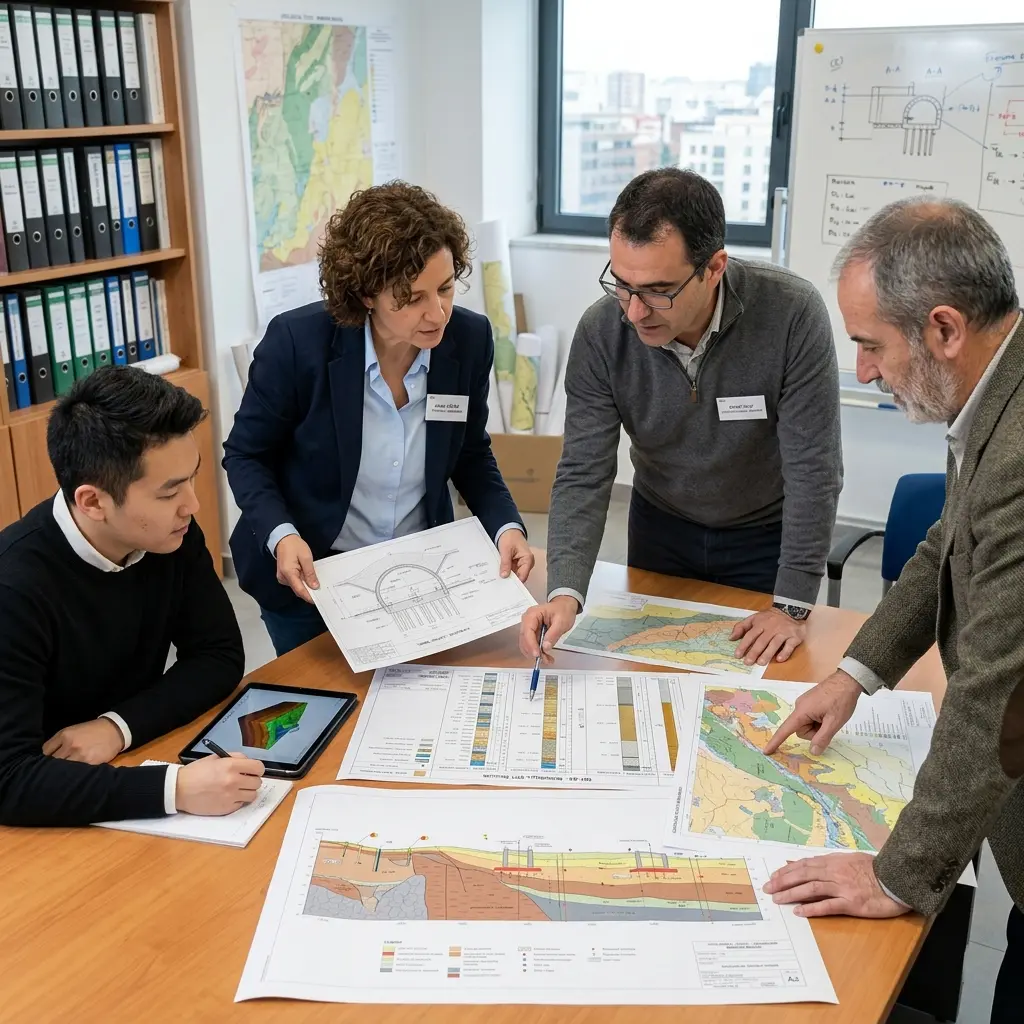
Tunneling GLT’s consulting services support underground construction programmes at every stage — from early-stage feasibility and ground investigation strategy through to construction oversight, tunneling systems assessment, and post-construction review. Each engagement is led by experienced engineers with direct site delivery background.
Tunnelling technology & systems advisory
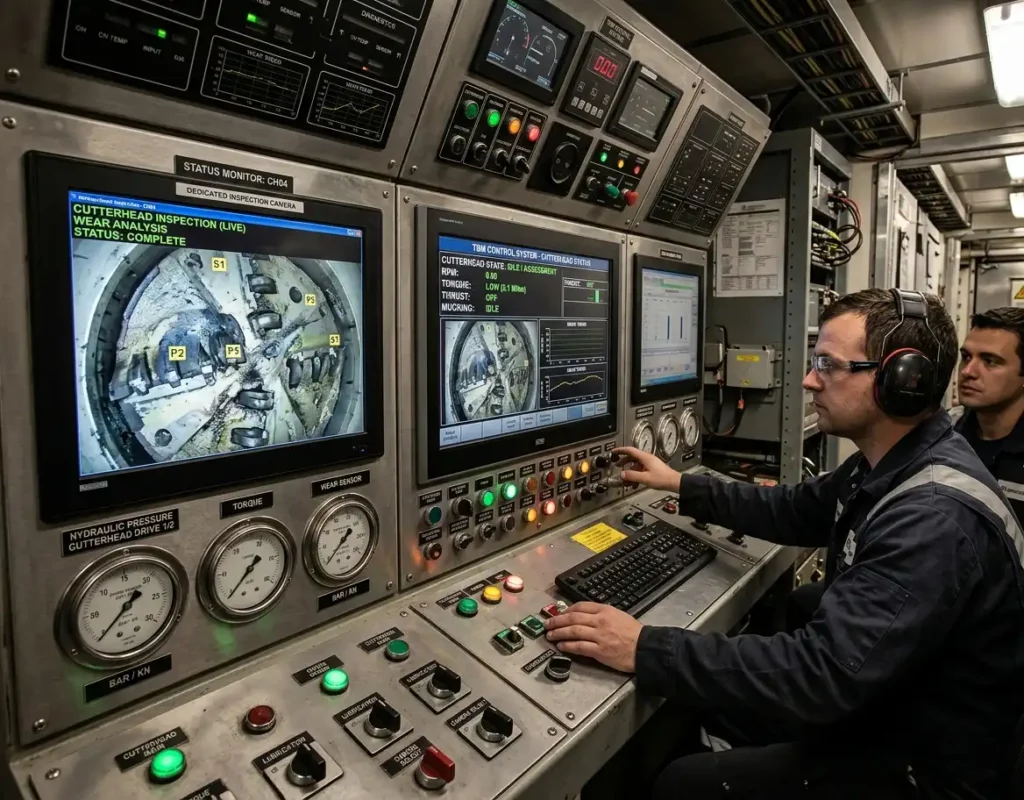
Selecting the appropriate tunneling technology for a given ground profile and programme is one of the most consequential decisions in underground construction. Tunneling GLT provides independent advisory on tunneling systems — from open-face and earth pressure balance TBMs to NATM and drill-and-blast — evaluating procurement routes, system compatibility with geotechnical data, and operational risk before commitment is made. This service is available to clients evaluating new procurements, reviewing inherited technology choices, or assessing tunneling systems as part of a technical due diligence process.
Geotechnical & ground investigation consulting
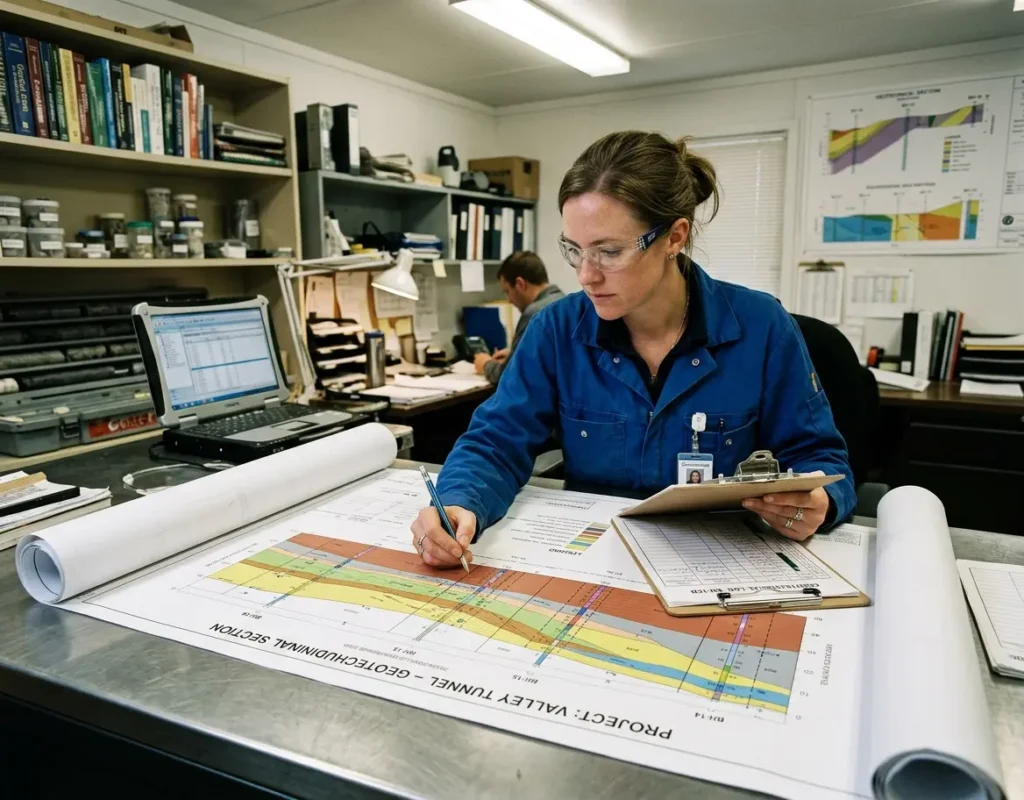
Ground conditions are the primary source of cost overrun and programme delay in underground construction. Tunneling GLT provides geotechnical consulting services covering the interpretation of ground investigation data, ground model development for tunnel alignment design, assessment of face stability requirements, and the review of primary support specifications for NATM tunnels, shield tunnels, and immersed tunnel schemes. Our consulting input is calibrated to the specific excavation method and lining system proposed, ensuring that geotechnical risk is clearly characterised and mitigated.
Tunnel excavation monitoring & instrumentation
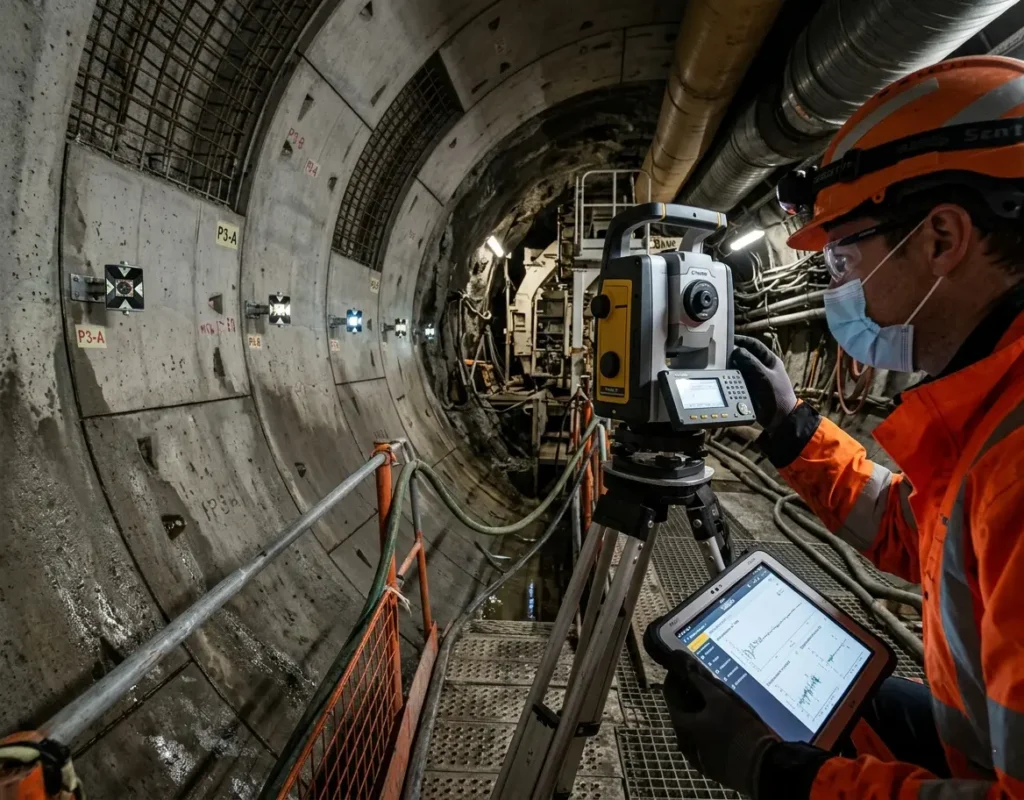
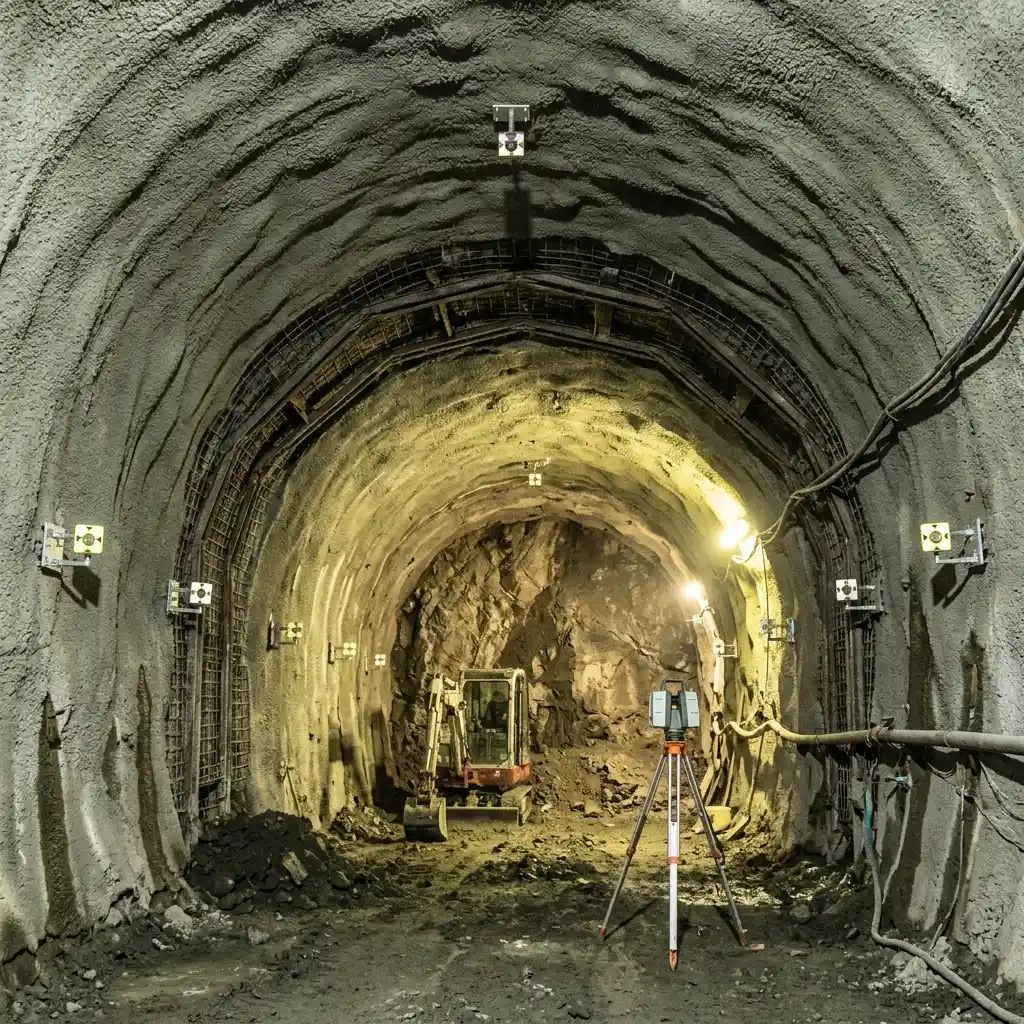
A tunnel excavation monitoring system is essential to managing ground movement, settlement risk, and primary support performance during underground construction. Tunneling GLT provides consulting services for the design and review of instrumentation schemes — including settlement monitoring arrays, convergence measurement, piezometer networks, and remote automated monitoring systems. We also provide independent interpretation of monitoring data on live construction contracts, supporting engineering decisions on support modification, face advance rates, and trigger level management. Our monitoring consulting is applicable to NATM tunnels, TBM drives, cut and cover structures, and immersed tunnel schemes.
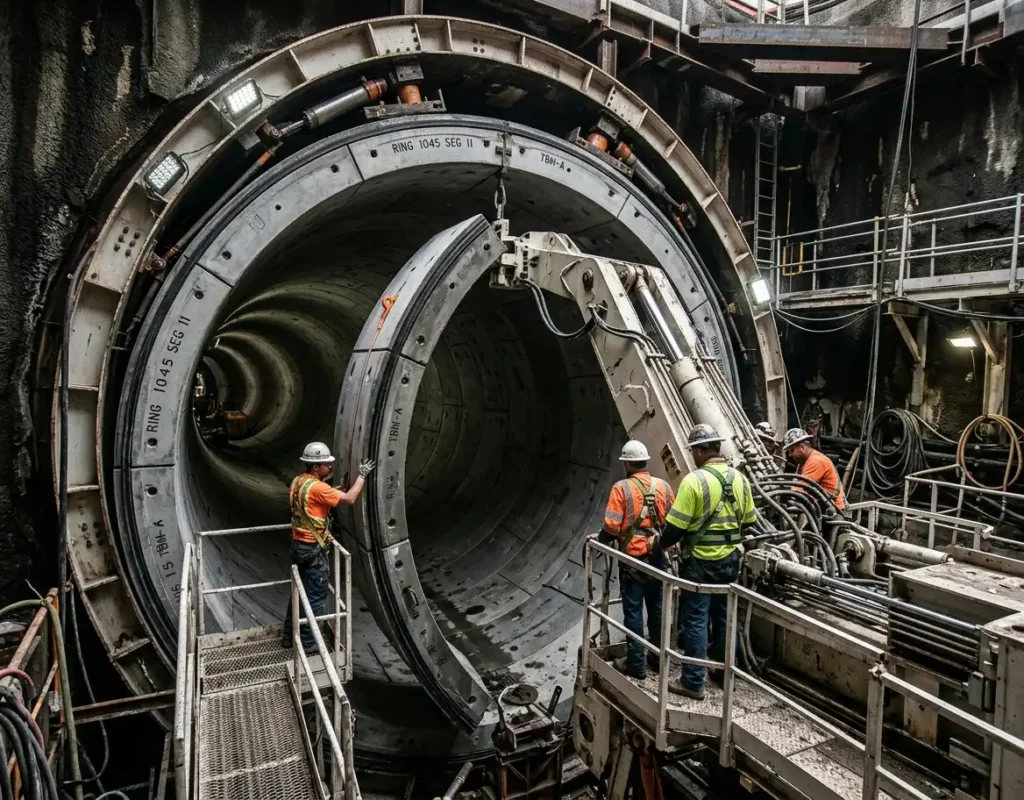
Tunnel formwork & lining systems review
The selection and specification of tunnel formwork and permanent lining systems significantly affects construction programme, cost, and long-term structural performance. Tunneling GLT provides technical consulting on tunnel formwork systems — including travelling formwork carriages for in-situ concrete final lining, precast segmental ring design, and shotcrete lining specifications for NATM applications. Our reviewing engineers assess formwork system proposals for compatibility with tunnel geometry, pour schedules, and structural requirements, and provide independent commentary for contractors, designers, and employers considering alternative lining solutions.
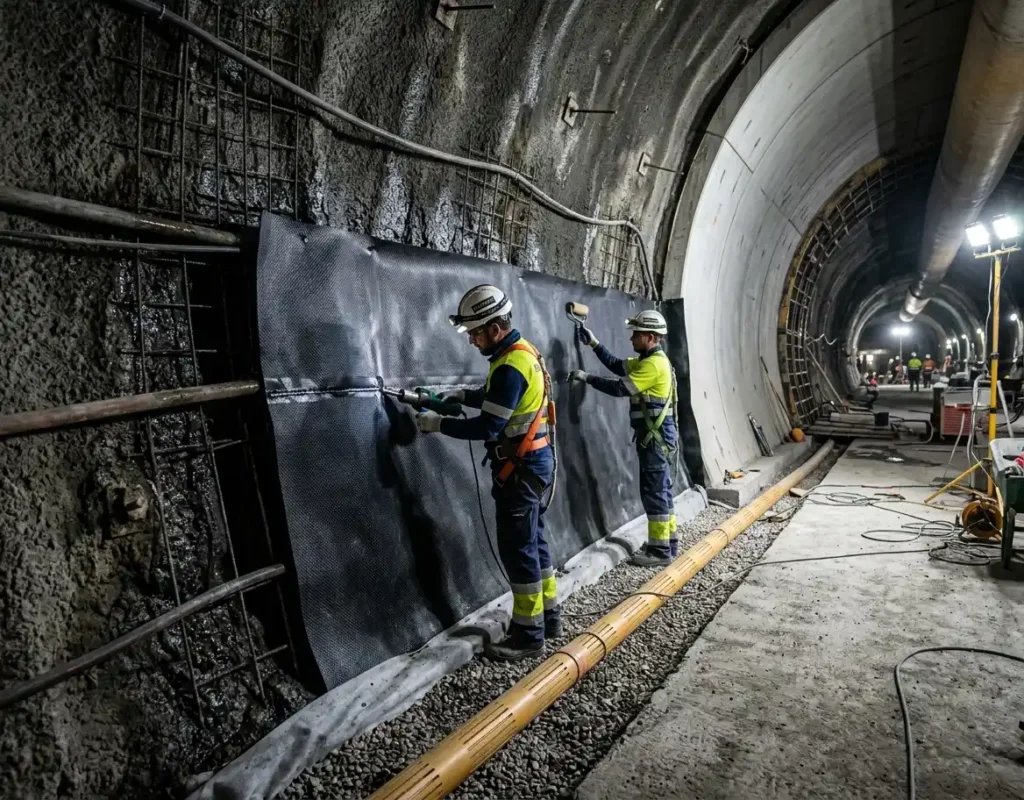
Tunnel waterproofing specification & review
Tunnel waterproofing failures represent some of the most costly and disruptive defects in underground infrastructure. Tunneling GLT provides consulting services for the specification, review, and assessment of tunnel waterproofing systems — from membrane selection and drainage layer design through to inspection protocols and defect investigation. Our consultants assess proposed waterproofing schemes against ground conditions, groundwater regime, and operational classification, and provide independent review of contractor submissions, installation quality, and post-construction performance. This service is applicable to new tunnel construction schemes, refurbishment programmes, and asset condition assessments.
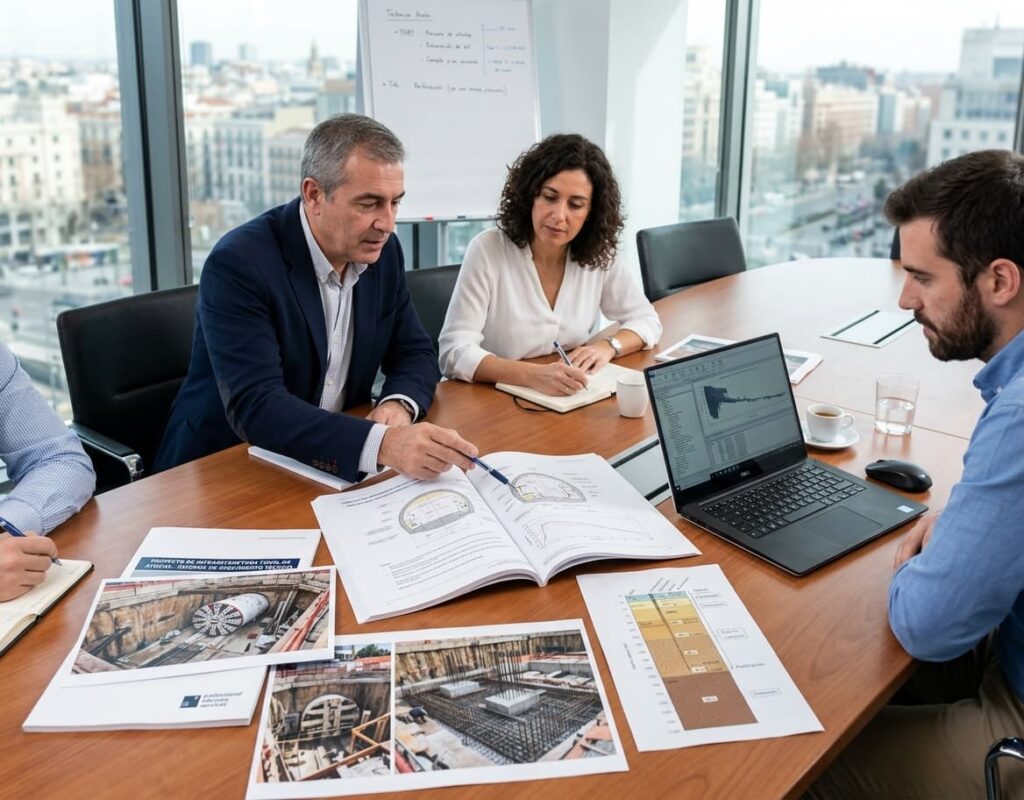
Technical due diligence for underground projects
Infrastructure investors, developers, and lenders commissioning underground construction projects require independent technical review before commitment. Tunneling GLT provides technical due diligence consulting for underground infrastructure schemes — assessing geotechnical adequacy, tunneling technology selection, programme realism, contractor competency, and risk exposure on behalf of clients who require an expert second opinion. Our due diligence reports are structured to inform financial and contractual decision-making, and are produced by engineers with direct construction delivery experience in the relevant methods.
Types of consulting engagements
Tunneling GLT’s technical consulting capability is deployed across the full range of underground infrastructure sectors and project stages, from pre-investment feasibility through to post-construction performance review.
Feasibility &
optioneering
Ground investigation strategy
Tunneling systems selection
NATM & shield tunnel review
Immersed tunnel consulting
Tunnel formwork assessment
Tunnel waterproofing review
Excavation monitoring systems
Contractor technical audits
Trusted by infrastructure owners and engineering firms
Tunneling GLT has provided technical consulting for underground construction programmes across Europe, Latin America, and international markets. The following reflect the experience of engineering directors and procurement teams who have engaged our consultants on technically complex underground projects.

We required an independent technical review of the tunneling technology proposed by our principal contractor before financial close. Tunneling GLT assessed the EPB TBM specification against our ground model, identified several cutterhead compatibility issues, and delivered a detailed report within programme. The review gave our board the confidence to proceed on an informed basis.
consulting
Ground movement on our NATM tunnel contract was approaching trigger levels and our construction team needed independent interpretation of the monitoring data. Tunneling GLT provided rapid-response consulting, reviewed the instrumentation scheme, reanalysed the settlement readings, and recommended a modified support regime. The contract continued without suspension and within specification.
Following handover, groundwater ingress was identified in a newly constructed utility tunnel. Tunneling GLT conducted a systematic defect investigation, identified the root cause in the membrane installation sequence, and produced a remediation specification that formed the basis of a successful contractual claim. The investigation was completed within four weeks of instruction.
Ready to discuss your underground project?
Whether you require independent technology selection advice, geotechnical consulting, tunnel excavation monitoring system design, or technical due diligence for a complex underground scheme, Tunneling GLT’s engineering team is available to assess your requirements and provide a commercially transparent consulting proposal.
Some related services
Technical and commercial answers to the most common questions about tunnelling technical consulting, ground engineering advisory, and underground project support.
What is tunnelling technical consulting?
Tunnelling technical consulting is the provision of specialist engineering advisory services to clients engaged in underground construction — without the consultant taking on a construction contracting role. It covers the full project lifecycle: feasibility and optioneering; geotechnical interpretation and ground model development; tunneling technology selection and systems review; construction monitoring and instrumentation; tunnel formwork and lining specification; tunnel waterproofing assessment; and post-construction defect investigation or expert witness support.
Unlike a contractor, a technical consultant provides independent, evidence-based advice. The relationship is with the client — owner, developer, funder, or principal contractor — rather than with the delivery supply chain, ensuring that advice is objective and commercially disinterested.
Tunneling GLT provides tunnelling technical consulting as a standalone service, drawing on the direct site delivery experience of our engineering team to inform practical and technically sound recommendations.
What tunneling technology advisory services does Tunneling GLT provide?
Tunneling GLT provides independent advisory on tunneling technology selection, systems compatibility, and procurement strategy for underground construction programmes. This includes assessment of TBM type selection — open-face, earth pressure balance (EPB), or slurry — against geotechnical ground models and groundwater conditions; review of NATM methodology and primary support specifications for soft ground and mixed-face tunnels; evaluation of shield tunnel geometry and segmental lining proposals; assessment of trenchless and pipe-jacking solutions for utility and sewer crossings; and technical review of tunnel formwork systems for in-situ final lining construction.
Our technology advisory service is available at all project stages — from pre-feasibility through to contractor technical audit during construction — and is calibrated to the information available at the time of engagement.
What is a tunnel excavation monitoring system and why does it require specialist consulting?
A tunnel excavation monitoring system is a structured instrumentation and measurement programme installed during underground construction to measure ground movement, settlement, convergence, and porewater pressure changes as excavation advances. It provides the data required to confirm that ground behaviour is within predicted limits, to manage risk to adjacent structures, and to make engineering decisions on primary support modification and face advance rates.
Specialist consulting is required because the adequacy of a monitoring system depends on the geotechnical conditions, the tunnelling method, the proximity of sensitive receptors, and the trigger level management framework in place. A monitoring scheme designed without sufficient understanding of these factors — or one whose data is not actively interpreted by experienced engineers — provides a false sense of control.
Tunneling GLT provides consulting services covering monitoring scheme design, trigger level framework development, independent data interpretation on live contracts, and review of existing instrumentation schemes on projects where monitoring performance is in dispute.
What is NATM tunnel consulting and when is it required?
The New Austrian Tunnelling Method (NATM) is a sequential excavation approach used in rock and soft ground, in which the excavation advances in controlled increments and the surrounding ground mass is monitored and supported in a structured sequence. NATM tunnel consulting is required when a client needs independent assessment of a proposed or ongoing NATM programme — including the adequacy of the excavation sequence, the design of primary support (shotcrete, lattice girders, rock bolts, and steel sets), the monitoring regime, and the competency of the construction team.
Common triggers for NATM technical consulting include: pre-contract review of a contractor’s NATM method statement; independent monitoring interpretation during construction; investigation of incidents involving ground movement or face instability; and post-construction review of support adequacy as part of a defect or claims process.
What is immersed tunnel consulting and what does it involve?
An immersed tunnel is constructed by fabricating reinforced concrete or steel tube elements in a dry dock or casting yard, floating them to the crossing location, and sinking them into a prepared trench on the seabed or riverbed, where they are connected and the joints waterproofed. Immersed tunnels are used for deep water crossings — harbour tunnels, estuary crossings, and port approach tunnels — where bored tunnel methods would be impractical or uneconomical at the required depth.
Tunneling GLT provides technical consulting for immersed tunnel projects, covering: feasibility assessment and route optioneering; joint design and waterproofing system review; element installation methodology assessment; and geotechnical and hydrodynamic risk evaluation. Our consulting on immersed tube schemes is calibrated to the specific waterway crossing conditions and the client’s construction procurement strategy.
What tunnel formwork consulting does Tunneling GLT offer?
Tunnel formwork consulting covers the technical assessment of formwork systems proposed for the construction of in-situ concrete tunnel linings — including final lining in mined and NATM tunnels, base slabs, invert structures, and cross-passage linings. Our consulting reviews address the structural adequacy of formwork proposals, pour sequencing and falsework loading, compatibility with tunnel geometry (including curved alignments and variable cross-sections), and the construction programme implications of the proposed formwork system.
Tunnel formwork consulting is typically instructed by employers reviewing contractor submissions during procurement, by contractors seeking independent review of proprietary system designs, or by project managers investigating programme overruns linked to formwork performance.
What does tunnel waterproofing consulting involve?
Tunnel waterproofing consulting involves the independent review, specification, or investigation of waterproofing systems used in underground structures. This includes assessment of membrane type and installation specification for mined tunnels and NATM schemes; review of segmental lining gasket design for TBM-bored tunnels; evaluation of waterproofing proposals for immersed tunnel joint systems; and investigation of existing waterproofing failures for defect analysis and remediation specification.
Effective tunnel waterproofing consulting requires an understanding of the groundwater regime, the structural lining system, the operational classification of the tunnel, and the construction methodology — all of which influence membrane selection, detailing, and quality assurance requirements. Tunneling GLT provides consulting across this full range of waterproofing questions, at design stage and in response to performance failures on completed structures.
What is technical due diligence for an underground construction project?
Technical due diligence for underground construction is an independent engineering review conducted on behalf of a client — typically an investor, lender, or developer — to assess the technical soundness of a proposed or ongoing underground construction programme before a financial or contractual commitment is made.
A technical due diligence review for an underground project typically covers: adequacy of geotechnical ground investigation and ground model development; appropriateness of the tunneling technology selected; realism of the construction programme; competency and track record of the appointed contractor; adequacy of the monitoring and risk management framework; and identification of technical risks that may affect project cost, programme, or performance.
Tunneling GLT provides structured technical due diligence reports for underground infrastructure projects, produced by engineers with direct construction delivery experience in the relevant tunnelling methods and ground conditions.
How are tunnelling consulting engagements structured and priced?
Tunnelling consulting engagements are structured according to the nature of the question, the stage of the project, and the volume of information available for review. Short-form advisory engagements — technology selection reviews, monitoring scheme assessments, or document reviews — are typically scoped and priced on a fixed-fee basis following an initial assessment of the information to be reviewed. Extended engagements — construction period monitoring consulting, technical due diligence for complex programmes, or expert witness assignments — are structured on a time and resource basis with agreed reporting milestones.
Tunneling GLT provides a commercially transparent proposal following an initial review of project information. Contact our engineering team to discuss the scope of your consulting requirement.
What qualifications and experience should a tunnelling technical consultant hold?
A tunnelling technical consultant should hold relevant academic qualifications in civil or geotechnical engineering, professional registration with an accredited engineering institution (such as ICE, IStructE, or equivalent), and — critically — demonstrable direct experience of underground construction delivery in the tunnelling methods relevant to the project in question.
The most important quality in a tunnelling consultant is engineering judgement formed by site experience: the ability to interpret geotechnical data, assess construction methodology, and evaluate monitoring results in the context of real underground construction conditions. Advisory produced by engineers with no direct tunnelling site background is often technically incomplete and may miss the practical risks most likely to affect project outcomes.
Tunneling GLT’s consulting team combines professional engineering credentials with direct site delivery experience across TBM, NATM, shield tunnel, cut and cover, and trenchless construction methods.